Doubt is THE movie based on the play.. staring Amy Adams, Meryl Streep, and Philip Seymour Hoffman.
on the surface, this movie looks like it's about whether a priest molested a child in the 1960s. but it is about so much more!
it is about "how do we know what we know?" namely, the postmodern problem. issues of "knowing" and "knowledge" are constantly brought up and questioned. the authority doesn't know anything more than we do... however, there is a bright side. Hoffman states that "Doubt can be a powerful a bond as certainty." meaning all the creeds, religions, and institutions and their claim on truth has garnered many allies... but saying "i don't know" can garner just as many.
we see the conflict of the old guard and the new... traditional catholic versus vatican II. authoritarian power relations structure versus a progressive, empathetic style. views of humanity being good and bad.
doubt has so much more than just molestation doubts... it's about how ppl bond and separate. the basis of community is if we confess our frailty and our skepticism, that is the best way to form strong communal bonds. Streep and Hoffman don't do this between the two of them, although they both connect to Adams, and thus their bond never solidifies.
i found this movie absolutely breathtaking. it's a minimalist show with nothing fancy, no swelling musical notes to enhance the mood or even bright colors... but it is spellbinding and it will be with you long after you watch it.
Monday, September 07, 2009


Wednesday, September 02, 2009
Inclusion?
i spent this past weekend in Ohio, hang'n out with some of our oldest and bestest friends. it is such a blessing to be able to share the journey with those who we were able to see fall in love, get married, and have kids. now we're all have'n a blast chase'n after kids, and we're in awe that we're all together.
but there's an added layer on it. we're all of different faiths. one of my buddies converted from Christianity to Judaism, as this is his wife's faith. he is devout and they are both really involved in their community. the other couple is an inter-faith couple. and i, of course, am in seminary, so that puts Kate and I squarely in the "Christian Camp." so here's the whole spectrum from total Conservative Jewish to in between to Emergent Christian (if i have to label myself something...).
but this weekend has shown that despite our different religious traditions, we're able to COEXIST. we're friends, closer now, despite the difference. but how? how can we still be friends when there's this gap of faith? won't the difference in religious affliation tear us apart? would we be argue'n with our Jewish friends on the doctrine of the Trinity or convince'n the inter-faith couple to decide which tradition to follow, instead of being some sort of heretical mutt spirituality that will just confuse their kids?
no.
because we learn from each other. we have in the past... my buddy taught me how to properly iron, his wife taught me the importance of not wearing blue with black (and i just LOVE sending Kate with her to shop!). The other dude taught me all the best trails in the DC area and his wife is a great resource for books and movies to watch. watching the interfaith couple talk and navigate their traditions is inspiring and i am constantly impressed and learning new perspectives and ways to compromise. the discussions on religion are RICH because of the different perspectives. we all bring something to it. there is room for us all and we don't get too hung up on the differences, mainly the nuanced similarites.
it reminds me of a verse from my own tradition, James 3:13 which states
there's no ownership on wisdom, it comes from everywhere and anyone can have it, from the 3rd grade educated kid to the 80 year old Harvard Dr. wisdom knows no creed, race, socio-economic status... but it's hard to keep open, to try to include it all. even ones that i'd rather not look for or try to accept.
as evidenced by a recent conversation over at Jason's blog , how do i as a Christian honor my own tradition without superceeding my friends? how can i seek to honor the Jewish roots of my faith without overstepping?
i don't know. but i do know that our friendships will last and that our children will know themselves as friends of the family before they know of the differing traditions. to them, there will be no separation, only honoring and inclusion.
so that's what i'm hope'n to do. to honor wisdom in all forms.. to seek understanding of interpretation and see how it's practically played out. Grace will abound, wisdom will be honored, and everyone is gonna learn something (even if it's not what to say or do...).
blessings to all who are on the journey, seeking to know God (or put "existence" if you're uncomfortable with God-talk) and thanks for your words, insights, challenges, and considerations.
but there's an added layer on it. we're all of different faiths. one of my buddies converted from Christianity to Judaism, as this is his wife's faith. he is devout and they are both really involved in their community. the other couple is an inter-faith couple. and i, of course, am in seminary, so that puts Kate and I squarely in the "Christian Camp." so here's the whole spectrum from total Conservative Jewish to in between to Emergent Christian (if i have to label myself something...).
but this weekend has shown that despite our different religious traditions, we're able to COEXIST. we're friends, closer now, despite the difference. but how? how can we still be friends when there's this gap of faith? won't the difference in religious affliation tear us apart? would we be argue'n with our Jewish friends on the doctrine of the Trinity or convince'n the inter-faith couple to decide which tradition to follow, instead of being some sort of heretical mutt spirituality that will just confuse their kids?
no.
because we learn from each other. we have in the past... my buddy taught me how to properly iron, his wife taught me the importance of not wearing blue with black (and i just LOVE sending Kate with her to shop!). The other dude taught me all the best trails in the DC area and his wife is a great resource for books and movies to watch. watching the interfaith couple talk and navigate their traditions is inspiring and i am constantly impressed and learning new perspectives and ways to compromise. the discussions on religion are RICH because of the different perspectives. we all bring something to it. there is room for us all and we don't get too hung up on the differences, mainly the nuanced similarites.
it reminds me of a verse from my own tradition, James 3:13 which states
The wisdom that comes from above is first of all pure; then peace-loving, considerate, submissive, full of mercy and good fruit, impartial and sincere. Peacemakers who sow in peace raise of harvest of righteousness.
there's no ownership on wisdom, it comes from everywhere and anyone can have it, from the 3rd grade educated kid to the 80 year old Harvard Dr. wisdom knows no creed, race, socio-economic status... but it's hard to keep open, to try to include it all. even ones that i'd rather not look for or try to accept.
as evidenced by a recent conversation over at Jason's blog , how do i as a Christian honor my own tradition without superceeding my friends? how can i seek to honor the Jewish roots of my faith without overstepping?
i don't know. but i do know that our friendships will last and that our children will know themselves as friends of the family before they know of the differing traditions. to them, there will be no separation, only honoring and inclusion.
so that's what i'm hope'n to do. to honor wisdom in all forms.. to seek understanding of interpretation and see how it's practically played out. Grace will abound, wisdom will be honored, and everyone is gonna learn something (even if it's not what to say or do...).
blessings to all who are on the journey, seeking to know God (or put "existence" if you're uncomfortable with God-talk) and thanks for your words, insights, challenges, and considerations.
Tuesday, September 01, 2009
CPE
The journey of a thousand miles begins with a single step. Sometimes the path leads places I don’t want to go, like to seminary or to places where I’ll be vulnerable. Or even to the Emergency Room. CPE is something i'm required to do and it stands for Clinical Pastoral Education. I work as a chaplain from now until Dec. 15th. Funny for a risk-adverse guy like me who has been in the ER only three times in his life.... i don't like hospitals and can't even watch Discovery Health without feeling queasy. i was in the room for Eve's birth, but that was a bit different, being with strangers is another story.. so i'm worried.... but i've found that this is what believing in God does for me, to lead me to the uncomfortable places and to wrestle before I cross over to the other side of the river. Am I wrestling with God, an angel, or myself? I never know. I just know that where I am at is different than where I was.
I have just followed around a veteran chaplain for a day on the floor, so my experience has been limited thus far. It has spawned a slew of new thoughts and considerations. I have been kicking around the idea of whether or not “religious” people are different from nonreligious people. I thought that there really was no difference aside from one day a week. But seeing the work that is being done in Lancaster General Hospital, I think that there’s more to it. Religious people do things that no one else will do. it's like they're jump'n right on the tracks of the oncoming Suffering Express! Going into these hospitals and listening to stories and hearing of the suffering people are in boggles my mind. Then I notice that no atheist is in a chaplain role. To put oneself right in the way of suffering is something I only see being done by those who subscribe to a belief system.
Then there’s the belief system to consider. In seminary, I attack any logical inconsistencies in my own as well as my fellow classmates theologies but in a chaplain role I found myself just listening. Even when I feel the hairs starting to stand up on the back of my neck, I consider where the other person is coming from. I empathize. From shadowing the vet and hearing my supervisors talk, this is what chaplains are supposed to do. They are largely into hospitality; care for those in trauma making sure nothing is lost in the chaos and visits and prayers for those who are in long term. They don’t run around and tell people what to believe and they aren’t there to make others feel better, although people do after a visit. Largely they are there as a sounding board, to let the person who is suffering know that they aren't alone.
Maybe that’s enough. To know that you aren’t alone, that someone is with you. Just like I find comfort that I am not alone and I trust that God is with us, Immanuel.
So I am already learning a lot! I like my peers and the diversity they bring and how they make me consider various aspects of my own faith like miraculous healing and what I make of Jesus’ role as a healer. I am only nervous about doing my first Code T or T Alert and hope I will be shadowing someone during that time.
All in all, I feel supported and excited to be learning new things and discovering “blind spots” in my own thinking and theology. I’m looking forward to seeing how God is at work in the world beyond my limited scope. I am nervous about trauma but the support from both the LGH staff and from my family is very reassuring.
I have just followed around a veteran chaplain for a day on the floor, so my experience has been limited thus far. It has spawned a slew of new thoughts and considerations. I have been kicking around the idea of whether or not “religious” people are different from nonreligious people. I thought that there really was no difference aside from one day a week. But seeing the work that is being done in Lancaster General Hospital, I think that there’s more to it. Religious people do things that no one else will do. it's like they're jump'n right on the tracks of the oncoming Suffering Express! Going into these hospitals and listening to stories and hearing of the suffering people are in boggles my mind. Then I notice that no atheist is in a chaplain role. To put oneself right in the way of suffering is something I only see being done by those who subscribe to a belief system.
Then there’s the belief system to consider. In seminary, I attack any logical inconsistencies in my own as well as my fellow classmates theologies but in a chaplain role I found myself just listening. Even when I feel the hairs starting to stand up on the back of my neck, I consider where the other person is coming from. I empathize. From shadowing the vet and hearing my supervisors talk, this is what chaplains are supposed to do. They are largely into hospitality; care for those in trauma making sure nothing is lost in the chaos and visits and prayers for those who are in long term. They don’t run around and tell people what to believe and they aren’t there to make others feel better, although people do after a visit. Largely they are there as a sounding board, to let the person who is suffering know that they aren't alone.
Maybe that’s enough. To know that you aren’t alone, that someone is with you. Just like I find comfort that I am not alone and I trust that God is with us, Immanuel.
So I am already learning a lot! I like my peers and the diversity they bring and how they make me consider various aspects of my own faith like miraculous healing and what I make of Jesus’ role as a healer. I am only nervous about doing my first Code T or T Alert and hope I will be shadowing someone during that time.
All in all, I feel supported and excited to be learning new things and discovering “blind spots” in my own thinking and theology. I’m looking forward to seeing how God is at work in the world beyond my limited scope. I am nervous about trauma but the support from both the LGH staff and from my family is very reassuring.
Thursday, August 27, 2009
Moments
I hope that i will sieze these fleeting moments. my world is so rich... and it's bizarre to think that all of that nothing amounts to something. reality is mostly empty space, nothing that is pose'n as something. and yet all of us exist.
these symbols you are reading aren't the images that are conjured in your head.
one day my daughter will speak in complete sentences, drive a car, find love and heartbreak and love again...
all we have is now and metaphors to try and capture it. even our best technology, video camera's that record in HD, digital camera's that can freeze and instant, are nothing compared to the present moment, and our memories of it. and by the time you recognize this moment, this moment will be gone, but you'll bend the light pretending that it some how lingered on.
rawk in these mountains and now diamonds will remain. we're live'n in this life together and we'll wait to find if it lasts forever...
forever and ever amen.
Tuesday, August 25, 2009
Heaven or Why I am a Universalist
I had a great conversation this summer with my friend and seminary colleage Sally... and then now with Jason posting about heaven and hell and Julia's inquiry as to what i think about the here-after, i figured i'd post a kinda-comprehensive view of the afterlife. This of course is going off the assumption that there is an afterlife and also through the Christian-lens. So here it goes.
largely, we have no idea what happens on the other side. i see the scriptures as mainly pretaining to the here and now and the work of bring about God's kin-dom to earth. but this leads to the idea that there is a kin-dom already in existence and it must be brought here.

there is an intense dualism here, as Jay pointed out, that if there is a kin-dom of heaven, there must also be an opposite. some believe that there is a hell and satan who is fighting to bring that to earth, while others think that we're already in hell. i don't think so. i think we're in creation, we have a great deal of free will and we screw up a lot yet learn from it. for me the world is getting better, not worse. as we learn, we do better. but what about those who don't? what if you die and get there and see God face to face and are forgiven? prodical son remember? it's not about book keeping it's about forgiveness and uncomprehensible grace. like the parable of the workers in Matt 20:1-16. those who have been working longer are paid the same as those who showed up in the last five minutes. grace isn't fair. and if we are free to choose God in this life, it stands to reason that we're free to choose or deny in the next.
John 3:16-21 talks about how Jesus doesn't condemn the world but save it... so if you have to be a Christian to do this then mathmatically, Jesus condemned the world because there are more nonChristians in the world than Christians, and more dead nonChristians than Christians (sometimes at the hands of Christians, but that's another story). unless "those who love the light" can be ppl who follow God under a different name.. because since Jesus is God and if one would worship God, then you believe in Christ byproxy because of the Three-in-one deal we have going on. so everyone gets in... but not everyone will choose it. Hell for me, would be those who can't accept, even after meeting God face-to-face, that they are loved.
it was by reading the scriptures that i got to this point... it was what made me break from my Catholic upbringing. because if it's all about "Believing" then what? which way is right, protestant or catholic? and then which one of those? what if the Unitarians are right and there is just one God and Jesus ain't it like we think (i.e. no Trinity?). i was told my mom was going to hell by my priest during mass.. i walked out. later, i was told that all protestants were going to hell because they aren't "right". and when you visit the catholic church, you have to not only be a Catholic, but a PRACTICING one to take communion. this is anti-inclusion to the extreme. the liturgy of the RC church is the most unwelcoming to visitors precisely because they think they have it and don't need to be of service. however, they miss something.... all of this "right and wrong" has everything to do with RELIGION and NOTHING to do with Christ. who is Christ's brothers and sisters? those who do the will of his Father! (Matt 12:50). and that is to love their neighbor and God with heart mind and strength. plus Jesus never asked the sinners, prostitutes, adulterers, or lepers to first believe in him before he healed them. he just did.
as Robert Capon states: "Christianity is not a religion. Christianity is the proclamation of the end of religion, not of a new religion, or even of the best of all religions. ...If the cross is the sign of anything, it's the sign that God has gone out of the religion business and solved all of the world's problems without requiring a single human being to do a single religious thing. What the cross is actually a sign of is the fact that religion can't do a thing about the world's problems - that it never did work and it never will."
2 Corinthians 5:21. "He made him who knew no sin to become sin for our sakes. . . ." The job is done. The church doesn't preach that, though. It's always saying the job is done; but then it insists you have to cooperate with that job before it will be done for you. Wrong! It is done for you. It has been done for you. It's all done for you. Trust it. i seems to me that we're too hung up on trying to get ppl to fear hell to become Christian. this is the wrong step! it is the joy of being Christian that inspires conversion, not the fear of hell yet every preacher i hear seems to be SOOOO hung up on hell and salvation, describing the levels of hell in great detail "as if they spent several years in that commonwealth" (Erasmus). Jesus gave no systematic or geographical map of hell. so forget what you know about this as this is not the Good News. i was too hung up on this issue of damnation and think i drove too many from the faith when i was younger.. now i understand the WAY.. namely Christ. How did Jesus act? what did he do? did he run around saying "you're all gonna burn?" NO! There are some harsh words, but they are directed at those who think they have a handle on who is in and who is out.
When Jesus told his parables to the people, his disciples asked, why do you talk to them in riddles? And his answer was: "So they won't catch on. Because anything they could catch on to would be the wrong thing. As Isaiah said, seeing they don't see and hearing they don't hear, neither do they understand [Matthew 13:10-17]. That's why I talk to them like this: because I don't want them to have little lights go on in their heads. I want to put out all the lights they've got, so that in the darkness they can listen to me"
the parables basically give us is stuff we can't stand to hear. Take the Lost Sheep. What we want to hear is that the lost have to find themselves first and then come back to God. Wrong. All you've got to be is lost. Not fancily lost. Not ethically lost. Just plain lost. Likewise, all you've got to do to be raised from the dead is to be dead. Not uprightly dead or piously dead. Just dead.
so does this make me a pluralist? kinda. i see God at work in others.. like my brothers and sisters that are agnostic, atheist, Buddhist, Muslim, and Jewish. these ppl live the gospel whether they know it or not. i think Christ would have a lot to talk about with these people as well saying "i totally get that.. did you happen to read this passage? that's what i was talking about and you embody that!" to some extent it is "Christ by any other name..." but it's not an empty pluralism. there are unique things to each tradition, each philosophy has something i can affirm. however, i firmly believe that God as revealed through Christ (note: NOT Paul) loves and calls all ppl to Godself and heaven will simply be a matter of "i can't believe you love me God, but i tried to follow as best i knew how and what made sense in my context.... i accept your grace and forgiveness, please accept and forgive my disbelief and sins."
when you read the teachings of Buddha or Mohammed, you'll see how different their ethics and goals are. there are similarities, like Buddha's nonattachment is similar to Jesus' and Mohammed is all about submission to God's will, much like Jesus too. however, the end results aren't the same. Jesus wants to create heaven on earth and justice for all (esp. the poor, outcast, widowed, orphaned, etc) where as Mohammed seems more like a centralized Theocratic dictatorship (with him at the head as VOICE of Allah) and Buddha's ethic of service seems selfish as it's only about self-enlightenment. nirvana is nice, but i prefer heaven. Buddha is atheist, i believe that all of existence came from the Source, i.e. God. Jesus was Jewish, but we are a branch grafted onto that tree (Romans), but not entirely the same, plus the resulting years of oppression and persecution hasn't helped Judeo-Christian relations... but i firmly believe that there is a ton we can learn from our brothers and sisters... we do not supercede them, we have a different take on the TaNaK plus an appendix they don't have. we also don't have the midrash, Talmud, and many other traditions and cultures so vital to the Jewish faith. we Christians can learn a ton! anywho, i feel that all religious that are honestly followed and that are generous hearted are on the right track and are a great good to the world. the wrong-hearted religions have ppl blowing themselves up, starting wars, and calling others names, and that's not the type of religion, regardless of the name, that i'll support. intolerance will not be tolerated.
so what does this mean for Christians here and now? namely to serve some more! we are called to make disciples out of all nations, and we've done that. if you count up the scriptures though, we are to serve and forgive, and to serve.. not for conversion's sake... if we preach the Good News and it's not accepted, "we knock the dust from our sandles and move on" (Luke 9:5) without promising condemnation or judgment. i'm not friends with ppl from other religions to convert them, that is a dishonest friendship, a house built on sand.
Grace is grace, it has happened, all are forgiven. all things are being made new! this is cause for celebration! not war, injustice, and damnation (as those wouldn't be Good News). i hope the church can awaken to this idea, repent of their sins against other religions and against the Gospel, and bring a new era of "Thy will be done on earth, as it is in heaven."
blah blah blah! ;-) there is more to say... but i'm interested in what you think. let me know!
largely, we have no idea what happens on the other side. i see the scriptures as mainly pretaining to the here and now and the work of bring about God's kin-dom to earth. but this leads to the idea that there is a kin-dom already in existence and it must be brought here.

there is an intense dualism here, as Jay pointed out, that if there is a kin-dom of heaven, there must also be an opposite. some believe that there is a hell and satan who is fighting to bring that to earth, while others think that we're already in hell. i don't think so.
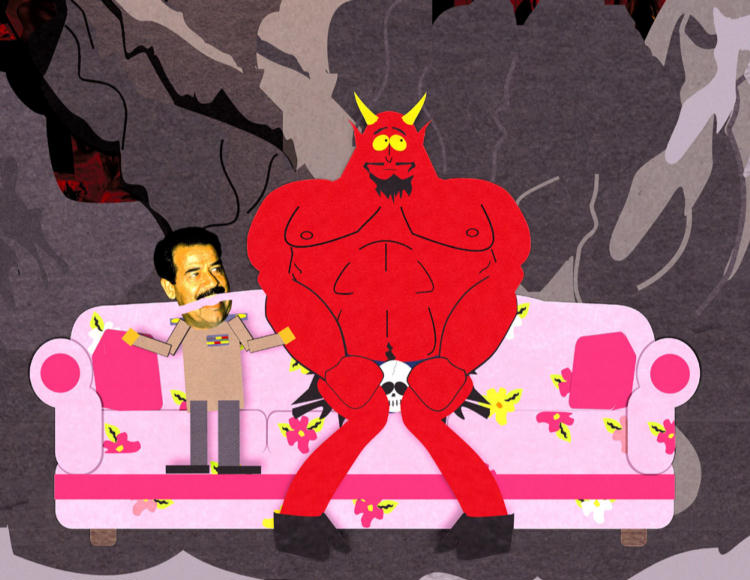 i think we're in creation, we have a great deal of free will and we screw up a lot yet learn from it. for me the world is getting better, not worse. as we learn, we do better. but what about those who don't? what if you die and get there and see God face to face and are forgiven? prodical son remember? it's not about book keeping it's about forgiveness and uncomprehensible grace. like the parable of the workers in Matt 20:1-16. those who have been working longer are paid the same as those who showed up in the last five minutes. grace isn't fair. and if we are free to choose God in this life, it stands to reason that we're free to choose or deny in the next.
John 3:16-21 talks about how Jesus doesn't condemn the world but save it... so if you have to be a Christian to do this then mathmatically, Jesus condemned the world because there are more nonChristians in the world than Christians, and more dead nonChristians than Christians (sometimes at the hands of Christians, but that's another story). unless "those who love the light" can be ppl who follow God under a different name.. because since Jesus is God and if one would worship God, then you believe in Christ byproxy because of the Three-in-one deal we have going on. so everyone gets in... but not everyone will choose it. Hell for me, would be those who can't accept, even after meeting God face-to-face, that they are loved.
it was by reading the scriptures that i got to this point... it was what made me break from my Catholic upbringing. because if it's all about "Believing" then what? which way is right, protestant or catholic? and then which one of those? what if the Unitarians are right and there is just one God and Jesus ain't it like we think (i.e. no Trinity?). i was told my mom was going to hell by my priest during mass.. i walked out. later, i was told that all protestants were going to hell because they aren't "right". and when you visit the catholic church, you have to not only be a Catholic, but a PRACTICING one to take communion. this is anti-inclusion to the extreme. the liturgy of the RC church is the most unwelcoming to visitors precisely because they think they have it and don't need to be of service. however, they miss something.... all of this "right and wrong" has everything to do with RELIGION and NOTHING to do with Christ. who is Christ's brothers and sisters? those who do the will of his Father! (Matt 12:50). and that is to love their neighbor and God with heart mind and strength. plus Jesus never asked the sinners, prostitutes, adulterers, or lepers to first believe in him before he healed them. he just did.
as Robert Capon states: "Christianity is not a religion. Christianity is the proclamation of the end of religion, not of a new religion, or even of the best of all religions. ...If the cross is the sign of anything, it's the sign that God has gone out of the religion business and solved all of the world's problems without requiring a single human being to do a single religious thing. What the cross is actually a sign of is the fact that religion can't do a thing about the world's problems - that it never did work and it never will."
2 Corinthians 5:21. "He made him who knew no sin to become sin for our sakes. . . ." The job is done. The church doesn't preach that, though. It's always saying the job is done; but then it insists you have to cooperate with that job before it will be done for you. Wrong! It is done for you. It has been done for you. It's all done for you. Trust it. i seems to me that we're too hung up on trying to get ppl to fear hell to become Christian. this is the wrong step! it is the joy of being Christian that inspires conversion, not the fear of hell yet every preacher i hear seems to be SOOOO hung up on hell and salvation, describing the levels of hell in great detail "as if they spent several years in that commonwealth" (Erasmus). Jesus gave no systematic or geographical map of hell. so forget what you know about this as this is not the Good News. i was too hung up on this issue of damnation and think i drove too many from the faith when i was younger.. now i understand the WAY.. namely Christ. How did Jesus act? what did he do? did he run around saying "you're all gonna burn?" NO! There are some harsh words, but they are directed at those who think they have a handle on who is in and who is out.
When Jesus told his parables to the people, his disciples asked, why do you talk to them in riddles? And his answer was: "So they won't catch on. Because anything they could catch on to would be the wrong thing. As Isaiah said, seeing they don't see and hearing they don't hear, neither do they understand [Matthew 13:10-17]. That's why I talk to them like this: because I don't want them to have little lights go on in their heads. I want to put out all the lights they've got, so that in the darkness they can listen to me"
the parables basically give us is stuff we can't stand to hear. Take the Lost Sheep. What we want to hear is that the lost have to find themselves first and then come back to God. Wrong. All you've got to be is lost. Not fancily lost. Not ethically lost. Just plain lost. Likewise, all you've got to do to be raised from the dead is to be dead. Not uprightly dead or piously dead. Just dead.
so does this make me a pluralist? kinda. i see God at work in others.. like my brothers and sisters that are agnostic, atheist, Buddhist, Muslim, and Jewish. these ppl live the gospel whether they know it or not. i think Christ would have a lot to
 talk about with these people as well saying "i totally get that.. did you happen to read this passage? that's what i was talking about and you embody that!" to some extent it is "Christ by any other name..." but it's not an empty pluralism. there are unique things to each tradition, each philosophy has something i can affirm. however, i firmly believe that God as revealed through Christ (note: NOT Paul) loves and calls all ppl to Godself and heaven will simply be a matter of "i can't believe you love me God, but i tried to follow as best i knew how and what made sense in my context.... i accept your grace and forgiveness, please accept and forgive my disbelief and sins."
when you read the teachings of Buddha or Mohammed, you'll see how different their ethics and goals are. there are similarities, like Buddha's nonattachment is similar to Jesus' and Mohammed is all about submission to God's will, much like Jesus too. however, the end results aren't the same. Jesus wants to create heaven on earth and justice for all (esp. the poor, outcast, widowed, orphaned, etc) where as Mohammed seems more like a centralized Theocratic dictatorship (with him at the head as VOICE of Allah) and Buddha's ethic of service seems selfish as it's only about self-enlightenment. nirvana is nice, but i prefer heaven. Buddha is atheist, i believe that all of existence came from the Source, i.e. God. Jesus was Jewish, but we are a branch grafted onto that tree (Romans), but not entirely the same, plus the resulting years of oppression and persecution hasn't helped Judeo-Christian relations... but i firmly believe that there is a ton we can learn from our brothers and sisters... we do not supercede them, we have a different take on the TaNaK plus an appendix they don't have. we also don't have the midrash, Talmud, and many other traditions and cultures so vital to the Jewish faith. we Christians can learn a ton! anywho, i feel that all religious that are honestly followed and that are generous hearted are on the right track and are a great good to the world. the wrong-hearted religions have ppl blowing themselves up, starting wars, and calling others names, and that's not the type of religion, regardless of the name, that i'll support. intolerance will not be tolerated.
so what does this mean for Christians here and now? namely to serve some more! we are called to make disciples out of all nations, and we've done that. if you count up the scriptures though, we are to serve and forgive, and to serve.. not for conversion's sake... if we preach the Good News and it's not accepted, "we knock the dust from our sandles and move on" (Luke 9:5) without promising condemnation or judgment. i'm not friends with ppl from other religions to convert them, that is a dishonest friendship, a house built on sand.
Grace is grace, it has happened, all are forgiven. all things are being made new! this is cause for celebration! not war, injustice, and damnation (as those wouldn't be Good News). i hope the church can awaken to this idea, repent of their sins against other religions and against the Gospel, and bring a new era of "Thy will be done on earth, as it is in heaven."
blah blah blah! ;-) there is more to say... but i'm interested in what you think. let me know!
Friday, August 21, 2009
Fox News is LIBERAL!
| The Daily Show With Jon Stewart | Mon - Thurs 11p / 10c | |||
| Fox News: The New Liberals | ||||
| ||||
i love the Daily Show! thanks to Steve S. for the find!
Thursday, August 20, 2009
Atonement
English royalty behaving badly! starring Keira Knightley and James McAvoy, about a love story that spans decades. something goes wrong and lovers are separated.
this movie is all about the idea that objectivity is a myth and all history is revisionist. there is the question of culpability as well as the ambiguity of guilt.
the most interesting thing is how Atonement doesn't happen through religion, or even in the real world. it happens through art. art is the new medium of forgiveness... the new priests are the artists and the creative imagination being the tool that can heal a fragmented world.
always look to see why the story is being told.. is it out of guilt, kindness, or "hey this is funny/cool/sad!" i loved this movie because i'm all about art! finally a movie that puts poetry back to what it was! the teacher of humanity and the balm for our souls... that's in Gilead? i dunno.. check out this film.. and i heart Keira
this movie is all about the idea that objectivity is a myth and all history is revisionist. there is the question of culpability as well as the ambiguity of guilt.
the most interesting thing is how Atonement doesn't happen through religion, or even in the real world. it happens through art. art is the new medium of forgiveness... the new priests are the artists and the creative imagination being the tool that can heal a fragmented world.
always look to see why the story is being told.. is it out of guilt, kindness, or "hey this is funny/cool/sad!" i loved this movie because i'm all about art! finally a movie that puts poetry back to what it was! the teacher of humanity and the balm for our souls... that's in Gilead? i dunno.. check out this film.. and i heart Keira
Tuesday, August 18, 2009
Defiance
Defiance was a movie we got from the Lancaster Public Library and I expected it to be a “shoot-‘em-up.” What I found was a film with deep meaning. movie directed by Edward Zwick and starring Daniel Craig and Liev Schreiber. The movie is based on the true story of the Bielski brothers who fought the Nazis in World War II on the Belarusian front. There are four Bielski brothers, Tuvia the oldest, Zus the husky fighter, Asael the sensitive one, and Aron the youngest.
The initial scenes show displacement, death, and chaos. Asael finds Zus in the woods and they head to their home only to find all of their family dead save for Aron. Zus grabs the mezuzah. When they find Tuvia in the woods later, Zus gives the mezuzah to Tuvia to acknowledge his leadership as well as to show the birthright. My friend and Jewish scholar, Yael, interprets this scene as “When a Jew moves from the house they remove their mezuzah from their doorways unless the next occupant is also Jewish. I saw the act of giving this mezuzah to the oldest brother as an affirmation of the family's survival. One day it would again be hung on the doorpost of his home, even if right now he has no home” (Lange).
The opening scene calls to mind the Diaspora Jews; the Jews of the Exodus, the Exile, and the various occupations. Like in the Bible, the setting is a character and must be considered and fought with every step of the way. The scarcity and menace of the forest is shown and felt in the characters. There are many shots of figures moving through the forest and very few shots of civilization. They are outgunned, out-numbered, and they are living in a forest with people used to the city life. When Tuvia meets Isaac Malbin, he askes what Isaac does. He states that he’s an intellectual that publishes a socialist pamphlet. Tuvia is surprised “That is a job?”
There are all sorts of problems here! Namely how do we live as community in a hostile world with shortages of food, resources, and with ppl you can't get along with... one of those being your fiesty brother.
The resolution to all of these problems is to form a resistant community removed from the rest of the world. There is a rejection of laying down and dying and “waiting for God.” In a sense, there is a rejection of traditional religion in the movie. “All too often traditional religion wants to take us back to ‘what was’ rather than help to root us in ‘what is’” (Taylor 122). Tuvia stated that the “best revenge is to live” and to live as humans with dignity.
There is however, a look back to traditional religion and ancestors to get the core identity of the group. Asael says, when training women how to shoot rifles, “this is not a gun, this is Bar Kochba’s spear. Samson’s jawbone. Elhud’s sword. The slingshot David used to bring down Goliath. We will become warriors like the Maccabees and the Tsiccerai.” This recalls the history of Jews being underdogs who resisted the invading power. The salvation comes from within the group, it is traded among the individuals of the group, one picking up the other when they fall. This is tested at every turn and there are exceptions to the law that Tuvia laid out.
A woman was raped by a German soldier and has a baby. Tuvia is at a crossroads because pregnancies are forbidden and he is considering shooting the mother and child. Lilka, Tuvia’s love interest, saves him and his humanity in this moment stating that the best thing to do is to bring life into the world of suffering and death; letting the child and mother live would be the ultimate act of defiance. Tuvia breaks down and cries here as he realizes that he loves Lilka. He finds love despite himself and affirms it. This is saving for Tuvia but there are two other times where others save him.
 The Germans bomb the camp set up by Tuvia and his group and they are forced to flee from the invading infantry. They run through the forest but reach a wetland. Tuvia sits at the river bank and weeps. This calls to mind Psalm 137, “By the rivers of Babylon, There we sat down and wept...” Tuvia has completely given up and mourns. Asael saves him saying, “God will not part these waters, we will do it ourselves and not by miracles but together, through our strength. Strong will help the weak.” Asael provides the vision that is counter to what the world is doing, namely the strong killing the weak, the many oppressing the few. In this community, the lion lays down with the lamb.
The community reaches the other side only to be attacked by a panzer. Zus comes in and saves the community he has been running away from. He had overheard that the Russians were going to let the Germans kill Tuvia’s group. They were using the community as cover as the Red Army escaped and set up camp elsewhere. Zus realized that he was not fighting for the same things as his fellow soldiers were. This realization called him back to his true community.
What does this movie say about God?
God is mentioned frequently here. The movie revolves around questions of Theodicy.
First, there is a hope of a messiah, as evidenced by the conversation between the teacher and the intellectual, Isaac Malbin:
Teacher: “All I know about politics is that there is a monster in the East with the big mustache and the monster in the West with the little mustache; this is all I need to know about politics.”
Isaac: “Your messiah will have a mustache too… and a full beard!”
Teacher: “The messiahs are all in politics and they are killing us.”
Zus: “What is killing me is all your talking!”
Isaac: “Roosevelt! He has no mustache!”
There is still a hope in a savior in the line of thought of Isaac. Isaac represents the tradition in Judaism that believed that God determined the time of the Messiah's coming by erecting a great set of scales. On one side, God placed the captive Messiah with the souls of dead laymen. On the other side, God placed sorrow, tears, and the souls of righteous martyrs. God then declared that the Messiah would appear on earth when the scale was balanced. According to this tradition, then, evil is necessary in the bringing of the world's redemption, as sufferings reside on the scale. This is a big feature in post-Holocaust theology (Braiterman 55,62). The teacher, on the other hand doesn’t believe in this tradition.
The teacher prays “Merciful God, we commit our friends - Ben Zion and Krensky - to You. We have no more prayers, no more tears; we have run out of blood. Choose another people. We have paid for each of your commandments; we have covered every stone and field with ashes. Sanctify another land. Choose another people. Teach them the deeds and the prophesies. Grant us but one more blessing: take back the gift of our holiness. Amen.” He would give up being “God’s chosen” because this has only brought oppression and death to his people. When the teacher is first introduced he states that he viewed this as a trial, “as God’s way… it isn’t. Recent events have somewhat shaken my resolve.” He represents the view of agnosticism. The teacher doesn’t fully present these thoughts, but lets them hang as to emphasize his doubt and his inability to make sense of the violence and slaughter around him. By the end of the film, he says to Tuvia in his dying words that “I had almost lost faith. But you were sent by God to save us.” Tuvia states that this is ridiculous but the teacher states “Just in case, I thank God and you. You are an angel.” This represents the tradition in Judaism that angels can be mortal and are “messengers” from God. This view is closer to an Open theism as found in the writings of Harold Kushner. This position that argues, as does Process Theology, that God prefers to persuade rather coerce, and/or that omnipotence has been willingly relinquished so that humanity might have absolute free will. For example, the scientist-theologian
John Polkinghorne suggests that, in addition to free will, God has created the universe in such a way that it is, to a significant extent, allowed to make itself, and that such a world "is better than the puppet theatre of a Cosmic Tyrant” (Polkinghorne 14).
For many, the Holocaust is evidence that there is no God and that life is unfair and the world is chaos. “Others see the same unfairness and ask themselves ‘Where do I get this sense of what is fair and what is unfair?” (Kushner 142). Tuvia and his brothers really don’t ask questions of God’s existence. They were on the margins in the community anyway, but their rebellious lifestyle gave them the tools to survive and lead in the new context. Some would call this providence. Process theologians would praise Tuvia and his brothers for listening to God’s urges and being self-aware enough to put what they have learned into practice in service of others.
Asael is the one Bielski brother that seems aware of his theology. It is one of community and one that does not ask for God to do the impossible or unnatural, nor does he operate out of a sense of revenge as Zus does. Asael is the theological voice of the movie. His view reflects that of the prayer “Likrat Shabbat” by Jack Riemer:
“We cannot merely pray to you O God to end war;
For the World is made in such a way
That we must find our own path of peace
Within ourselves and with our neighbors.
We cannot merely pray to you O God to root out Prejudice:
for we already have eyes
With which to see the good in all people
If we would only use them rightly.
We cannot merely pray to you O God to end starvation:
For we already have the resources
With which to feed the entire World
If we would only use them wisely.
We cannot merely pray to you O God to end despair:
For we already have the power To clear away slums and to give hope
If we would only use our power justly.
We cannot merely pray to you O God to end disease:
For we already have great minds
With which to search out cures and healings
If we would only use them constructively.
Therefore we pray instead
For strength, determination, and will power,
To do instead of merely to pray
To become instead of merely to wish:
So that our World may be safe,
And so that our lives may be blessed” (Kushner 118).
great film with a ton in it! WATCH IT! here's another great line:
Koscik: “Why is it so fucking hard to be friends with a Jew?”
Tuvia: “Try being one.”
wonderful! and thanks to Yael for help here!
The initial scenes show displacement, death, and chaos. Asael finds Zus in the woods and they head to their home only to find all of their family dead save for Aron. Zus grabs the mezuzah. When they find Tuvia in the woods later, Zus gives the mezuzah to Tuvia to acknowledge his leadership as well as to show the birthright. My friend and Jewish scholar, Yael, interprets this scene as “When a Jew moves from the house they remove their mezuzah from their doorways unless the next occupant is also Jewish. I saw the act of giving this mezuzah to the oldest brother as an affirmation of the family's survival. One day it would again be hung on the doorpost of his home, even if right now he has no home” (Lange).
The opening scene calls to mind the Diaspora Jews; the Jews of the Exodus, the Exile, and the various occupations. Like in the Bible, the setting is a character and must be considered and fought with every step of the way. The scarcity and menace of the forest is shown and felt in the characters. There are many shots of figures moving through the forest and very few shots of civilization. They are outgunned, out-numbered, and they are living in a forest with people used to the city life. When Tuvia meets Isaac Malbin, he askes what Isaac does. He states that he’s an intellectual that publishes a socialist pamphlet. Tuvia is surprised “That is a job?”
There are all sorts of problems here! Namely how do we live as community in a hostile world with shortages of food, resources, and with ppl you can't get along with... one of those being your fiesty brother.
The resolution to all of these problems is to form a resistant community removed from the rest of the world. There is a rejection of laying down and dying and “waiting for God.” In a sense, there is a rejection of traditional religion in the movie. “All too often traditional religion wants to take us back to ‘what was’ rather than help to root us in ‘what is’” (Taylor 122). Tuvia stated that the “best revenge is to live” and to live as humans with dignity.
There is however, a look back to traditional religion and ancestors to get the core identity of the group. Asael says, when training women how to shoot rifles, “this is not a gun, this is Bar Kochba’s spear. Samson’s jawbone. Elhud’s sword. The slingshot David used to bring down Goliath. We will become warriors like the Maccabees and the Tsiccerai.” This recalls the history of Jews being underdogs who resisted the invading power. The salvation comes from within the group, it is traded among the individuals of the group, one picking up the other when they fall. This is tested at every turn and there are exceptions to the law that Tuvia laid out.
A woman was raped by a German soldier and has a baby. Tuvia is at a crossroads because pregnancies are forbidden and he is considering shooting the mother and child. Lilka, Tuvia’s love interest, saves him and his humanity in this moment stating that the best thing to do is to bring life into the world of suffering and death; letting the child and mother live would be the ultimate act of defiance. Tuvia breaks down and cries here as he realizes that he loves Lilka. He finds love despite himself and affirms it. This is saving for Tuvia but there are two other times where others save him.
The community reaches the other side only to be attacked by a panzer. Zus comes in and saves the community he has been running away from. He had overheard that the Russians were going to let the Germans kill Tuvia’s group. They were using the community as cover as the Red Army escaped and set up camp elsewhere. Zus realized that he was not fighting for the same things as his fellow soldiers were. This realization called him back to his true community.
What does this movie say about God?
God is mentioned frequently here. The movie revolves around questions of Theodicy.
First, there is a hope of a messiah, as evidenced by the conversation between the teacher and the intellectual, Isaac Malbin:
Teacher: “All I know about politics is that there is a monster in the East with the big mustache and the monster in the West with the little mustache; this is all I need to know about politics.”
Isaac: “Your messiah will have a mustache too… and a full beard!”
Teacher: “The messiahs are all in politics and they are killing us.”
Zus: “What is killing me is all your talking!”
Isaac: “Roosevelt! He has no mustache!”
There is still a hope in a savior in the line of thought of Isaac. Isaac represents the tradition in Judaism that believed that God determined the time of the Messiah's coming by erecting a great set of scales. On one side, God placed the captive Messiah with the souls of dead laymen. On the other side, God placed sorrow, tears, and the souls of righteous martyrs. God then declared that the Messiah would appear on earth when the scale was balanced. According to this tradition, then, evil is necessary in the bringing of the world's redemption, as sufferings reside on the scale. This is a big feature in post-Holocaust theology (Braiterman 55,62). The teacher, on the other hand doesn’t believe in this tradition.
The teacher prays “Merciful God, we commit our friends - Ben Zion and Krensky - to You. We have no more prayers, no more tears; we have run out of blood. Choose another people. We have paid for each of your commandments; we have covered every stone and field with ashes. Sanctify another land. Choose another people. Teach them the deeds and the prophesies. Grant us but one more blessing: take back the gift of our holiness. Amen.” He would give up being “God’s chosen” because this has only brought oppression and death to his people. When the teacher is first introduced he states that he viewed this as a trial, “as God’s way… it isn’t. Recent events have somewhat shaken my resolve.” He represents the view of agnosticism. The teacher doesn’t fully present these thoughts, but lets them hang as to emphasize his doubt and his inability to make sense of the violence and slaughter around him. By the end of the film, he says to Tuvia in his dying words that “I had almost lost faith. But you were sent by God to save us.” Tuvia states that this is ridiculous but the teacher states “Just in case, I thank God and you. You are an angel.” This represents the tradition in Judaism that angels can be mortal and are “messengers” from God. This view is closer to an Open theism as found in the writings of Harold Kushner. This position that argues, as does Process Theology, that God prefers to persuade rather coerce, and/or that omnipotence has been willingly relinquished so that humanity might have absolute free will. For example, the scientist-theologian
John Polkinghorne suggests that, in addition to free will, God has created the universe in such a way that it is, to a significant extent, allowed to make itself, and that such a world "is better than the puppet theatre of a Cosmic Tyrant” (Polkinghorne 14).
For many, the Holocaust is evidence that there is no God and that life is unfair and the world is chaos. “Others see the same unfairness and ask themselves ‘Where do I get this sense of what is fair and what is unfair?” (Kushner 142). Tuvia and his brothers really don’t ask questions of God’s existence. They were on the margins in the community anyway, but their rebellious lifestyle gave them the tools to survive and lead in the new context. Some would call this providence. Process theologians would praise Tuvia and his brothers for listening to God’s urges and being self-aware enough to put what they have learned into practice in service of others.
Asael is the one Bielski brother that seems aware of his theology. It is one of community and one that does not ask for God to do the impossible or unnatural, nor does he operate out of a sense of revenge as Zus does. Asael is the theological voice of the movie. His view reflects that of the prayer “Likrat Shabbat” by Jack Riemer:
“We cannot merely pray to you O God to end war;
For the World is made in such a way
That we must find our own path of peace
Within ourselves and with our neighbors.
We cannot merely pray to you O God to root out Prejudice:
for we already have eyes
With which to see the good in all people
If we would only use them rightly.
We cannot merely pray to you O God to end starvation:
For we already have the resources
With which to feed the entire World
If we would only use them wisely.
We cannot merely pray to you O God to end despair:
For we already have the power To clear away slums and to give hope
If we would only use our power justly.
We cannot merely pray to you O God to end disease:
For we already have great minds
With which to search out cures and healings
If we would only use them constructively.
Therefore we pray instead
For strength, determination, and will power,
To do instead of merely to pray
To become instead of merely to wish:
So that our World may be safe,
And so that our lives may be blessed” (Kushner 118).
great film with a ton in it! WATCH IT! here's another great line:
Koscik: “Why is it so fucking hard to be friends with a Jew?”
Tuvia: “Try being one.”
wonderful! and thanks to Yael for help here!
Friday, August 14, 2009
Robbie the Rookie Zombie
but first a recap: a dear reader friend sent me this link from Torah: Rain for the Soul. SEE! I knew i wasn't original in this thought. Turns out Rambam had this interp of Genesis from the 1100s, and it's not unique to him!!! turns out we can learn a lot from other faiths if we shut up, listen, and stop trying to convert or damn them to hell.
Genesis Chapter 2: Well i guess this is growing up!
another awesome quote from that site: Those who learn for the sake of learning find the Torah sweet; those who learn for ulterior purposes find it bitter. (Zohar, iv, 229b)
now for FUN!
Robbie the Rookie Zombie
once upon a time there was a boy named Robbie who was bitten on his pinkie by a zombie. turns out that he turned into a zombie, but still had full use of his cognitive capabilities. so he decided to get up and go out and do what zombies were supposed to do.
but he couldn't remember what zombies were supposed to do all day. he then remembered reading somewhere that zombies were always looking for guys named Brian. so that's what he did. each day he'd go out and say "Brrrrrrriiiiiaaaaannnn.... BrrrrrrrriiiiiiiiIIIIIaaaaannn.... BBBBRRRRRiiiiiAAAANNNN..." until someone would say, "I'm Brian, how can I help you?" and Robbie would shake his hand and go home.
This left Robbie very unsatisfied and not to mention very hungry. But Robbie kept doing it, but asked if the Brian he met that day would buy him dinner. Most would (Brians are nice like that) but the food just didn't taste right to Robbie's zombified taste-buds.
One day, after months and months of being a zombie, Robbie ran into another zombie. He asked the zombie, "Hey, what's up with this Brian thing?" and the zombie was stunned!
"Brian?!" the zombie scoffed. "It's BRAINS! BRAINS, YOU IDIOT!"
It was then that Robbie realized that he had misinterpreted the text, and that he was also dyslexic.
Genesis Chapter 2: Well i guess this is growing up!
another awesome quote from that site: Those who learn for the sake of learning find the Torah sweet; those who learn for ulterior purposes find it bitter. (Zohar, iv, 229b)
so Dear TV Preachers,
stop putting the Bible through YOUR rubric of supporting conservative, capitalist, and sexist (among other -ist) values. learn for the sake of learning. struggle with it, learn from it, and be transformed by it. don't transform it to suit your needs and context. maybe why you're angry at your fellow humans (i.e. the gays, unbelievers, nonbelievers, nonChristian, Liberal Christian, Emerging Christian and secular-types, etc. etc. etc.) is because you're bitter. just a thought, could be wrong.
-L
now for FUN!
Robbie the Rookie Zombie
once upon a time there was a boy named Robbie who was bitten on his pinkie by a zombie. turns out that he turned into a zombie, but still had full use of his cognitive capabilities. so he decided to get up and go out and do what zombies were supposed to do.
but he couldn't remember what zombies were supposed to do all day. he then remembered reading somewhere that zombies were always looking for guys named Brian. so that's what he did. each day he'd go out and say "Brrrrrrriiiiiaaaaannnn.... BrrrrrrrriiiiiiiiIIIIIaaaaannn.... BBBBRRRRRiiiiiAAAANNNN..." until someone would say, "I'm Brian, how can I help you?" and Robbie would shake his hand and go home.
This left Robbie very unsatisfied and not to mention very hungry. But Robbie kept doing it, but asked if the Brian he met that day would buy him dinner. Most would (Brians are nice like that) but the food just didn't taste right to Robbie's zombified taste-buds.
One day, after months and months of being a zombie, Robbie ran into another zombie. He asked the zombie, "Hey, what's up with this Brian thing?" and the zombie was stunned!
"Brian?!" the zombie scoffed. "It's BRAINS! BRAINS, YOU IDIOT!"
It was then that Robbie realized that he had misinterpreted the text, and that he was also dyslexic.
Thursday, August 13, 2009
A Fallen Letter
Dear Fellow Christians,
okay... once and for all! there was never an GARDEN OF EDEN! there were never just two ppl, an adam or an eve. scientifically the earth is billions of years old. God is very old. so quit acting like we'll return to a perfect state.
if you want a fall, it'd be when the first multi-celled organism ate another multi-cellular organism. it may have been when the single-celled organism ate another one to become a multi-cellular organism! hell! i dunno! what i do know is we can't keep believing in a fall or original sin or baptism washing away.
i heard a devout Christian say that they really don't like how their baby is filled with original sin because it cries all the time. WTF?! why not just get it baptised? then the original sin would wash off and you'd have no more crying.. that didn't work?! baby is still crying? prolly cause it's not a sin! it's the only way the baby can tell you what it needs. this type of moronic thought is what is driving ppl away from Christianity.
also... let's rearrange our thought on the fall.. cause apparently ppl like this idea. so how about we start out as a little baby, we're selfish because we have no concept of other ppl... much like Adam and Eve. only thinking of themselves, unaware that their actions could have consquences. we make mistakes, we do what is forbidden, and sure.. we sin.. but we LEARN! we GO AND SIN NO MORE!
we fall UPWARDS. we go from a place of selfish innocence to a place of spiritual maturity. in our spiritual maturity we see the bigger picture (albeit not the whole one) and we trust that we are guided, loved, and sustained by God. so much so that we are able to forgive and love our enemies.
what do we think about that? is that something we can do with?
respectfully,
-L
okay... once and for all! there was never an GARDEN OF EDEN! there were never just two ppl, an adam or an eve. scientifically the earth is billions of years old. God is very old. so quit acting like we'll return to a perfect state.
if you want a fall, it'd be when the first multi-celled organism ate another multi-cellular organism. it may have been when the single-celled organism ate another one to become a multi-cellular organism! hell! i dunno! what i do know is we can't keep believing in a fall or original sin or baptism washing away.
i heard a devout Christian say that they really don't like how their baby is filled with original sin because it cries all the time. WTF?! why not just get it baptised? then the original sin would wash off and you'd have no more crying.. that didn't work?! baby is still crying? prolly cause it's not a sin! it's the only way the baby can tell you what it needs. this type of moronic thought is what is driving ppl away from Christianity.
also... let's rearrange our thought on the fall.. cause apparently ppl like this idea. so how about we start out as a little baby, we're selfish because we have no concept of other ppl... much like Adam and Eve. only thinking of themselves, unaware that their actions could have consquences. we make mistakes, we do what is forbidden, and sure.. we sin.. but we LEARN! we GO AND SIN NO MORE!
we fall UPWARDS. we go from a place of selfish innocence to a place of spiritual maturity. in our spiritual maturity we see the bigger picture (albeit not the whole one) and we trust that we are guided, loved, and sustained by God. so much so that we are able to forgive and love our enemies.
what do we think about that? is that something we can do with?
respectfully,
-L
Tuesday, August 11, 2009
How Low is the Bar Set?
hey you hetero-males out there! wanna know what makes the ladies crazy?! men with babies!
i was sitting in Longs Park, just minding my own business, trying to be still and know that God is God. I was just feeding Eve a bottle and reading Kushner's "When Bad Things Happen to Good People" and i was hit on by two different women.
the first woman, around my age, came up to me as her own kids were running around and throwing stuff in the lake and having fun. she stated how beautiful Eve was and we talked about how it is being a parent. as she was leaving she stated how i make beautiful babies. i stated how "i didn't really make her, my wife did, i just contribute a little at the beginning." to which she said "well, i'm sure you make the process as pleasurable as possible." i smiled at this and then she collected her kids and walked off. it only hit me later to which "process" she was talking about. sex? the pregnancy process (i.e. getting Kate ice cream and sunkist?)? the delivery or the parenting part? or the whole thing? was i being hit on?!
i brushed it off and continued with the bottle, Eve happily sucking the bottle down and staring at the willow branches swaying in the breeze. a 60-ish woman and her friend come up. they too fawn over Eve and state how great it is to see a dad out with his daughter. i asked why and they said "i had to about break my husband's arm... unless it was about sports..." as they were leaving, after a short convo, one of the women turned and said "it was great talking to you! take care! and you are just a vision in that hat!" (i was wearing my OU hat).
this of course is just two examples of a slew of things i overhear while spending my day with Eve. while on a walk i heard "I think it's so hot when dads push the stroller." from a group of moms... are dad's really that absent? i know my own was but for different reasons.. like he wasn't around! but are "present" dads this big of lumps?
the whole row here of seminary dads are all active and watching their kids during the day while the moms are out bring'n home the bacon. all i see, everywhere i look, are dads my age taking an active interest in their kids... both of my brother in laws do their own thing as well! they are active. so is this a stereotype left over from the previous generation? or are we the exceptions? or is the expectation bar set extremely low for men? how deep does our gender-ideals go?
i was sitting in Longs Park, just minding my own business, trying to be still and know that God is God. I was just feeding Eve a bottle and reading Kushner's "When Bad Things Happen to Good People" and i was hit on by two different women.
the first woman, around my age, came up to me as her own kids were running around and throwing stuff in the lake and having fun. she stated how beautiful Eve was and we talked about how it is being a parent. as she was leaving she stated how i make beautiful babies. i stated how "i didn't really make her, my wife did, i just contribute a little at the beginning." to which she said "well, i'm sure you make the process as pleasurable as possible." i smiled at this and then she collected her kids and walked off. it only hit me later to which "process" she was talking about. sex? the pregnancy process (i.e. getting Kate ice cream and sunkist?)? the delivery or the parenting part? or the whole thing? was i being hit on?!
i brushed it off and continued with the bottle, Eve happily sucking the bottle down and staring at the willow branches swaying in the breeze. a 60-ish woman and her friend come up. they too fawn over Eve and state how great it is to see a dad out with his daughter. i asked why and they said "i had to about break my husband's arm... unless it was about sports..." as they were leaving, after a short convo, one of the women turned and said "it was great talking to you! take care! and you are just a vision in that hat!" (i was wearing my OU hat).
this of course is just two examples of a slew of things i overhear while spending my day with Eve. while on a walk i heard "I think it's so hot when dads push the stroller." from a group of moms... are dad's really that absent? i know my own was but for different reasons.. like he wasn't around! but are "present" dads this big of lumps?
the whole row here of seminary dads are all active and watching their kids during the day while the moms are out bring'n home the bacon. all i see, everywhere i look, are dads my age taking an active interest in their kids... both of my brother in laws do their own thing as well! they are active. so is this a stereotype left over from the previous generation? or are we the exceptions? or is the expectation bar set extremely low for men? how deep does our gender-ideals go?
Thursday, August 06, 2009
Gran Torino
Clint Eastwood's last film is set in Detroit in the current times. It looks like a normal, run-of-the-mill Eastwood film with a gravel-voiced loner "take'n it to 'em AMERICAN STYLE!" but that's not it at all.
The mood is one of loss.. there is a loss of repect in the disrepectful youth, cultural expectations, respect for authority, tradition, and elders. Eastwood is in a classic role of his, namely an isolated and self-reliant person that is under siege and hostile to those around him. with good reason, dude has seen war in Korea, only survivor from his squad.
life for this character is not good as his wife just died, he doesn't like his kids or grandkids, the new priest is too young, and his neighborhood has gone to hell. Eastwood is a giant racist at the start of the film, calling his neighbors Swamp Rats, gooks, and all sorts of other fun things.
however, after saving a kid the Asian Hmong community rallies around their reluctant hero. they invite him over and he doesn't want to try the food, but at the urging of the young lady and the line "it's better than eating jerky" he tries it and falls in love with the food, the family, and the culture. the culture is one of respect for elders and traditions that Eastwood was mourning the loss of in his own family.
this movie is a secular transpotion of an Christian theme, namely a commentary on John 15:13 "No one has greater love than this, that one should lay down his life for his friends." the package of problems is also traditionally Christian, namely isolation, guilt, separation from God and others. Through Eastwood's friendship with the two youth next door, he opens up and chages. this movie shows the power of confession and relational living.
God in this film is persistent. grace and love is not through the traditional channels, such as the church or family. here we also see a new family emerge, like that Jesus talked in Mark 3:35: "For whoever does the will of God, the same is my brother, and my sister, and mother." Jesus erases the biological bonds of family and replaces them with theological ones.
the mediators of healing in the film are flawed human beings, esp. evident in the transformation of Eastwood. there is mutuality and reciprocity with these relationships and everyone comes out better for it... well.. save one, but even then, who knows?
i hope you will watch this film and give me feedback. it was one of the most moving movies i have seen this year.
The mood is one of loss.. there is a loss of repect in the disrepectful youth, cultural expectations, respect for authority, tradition, and elders. Eastwood is in a classic role of his, namely an isolated and self-reliant person that is under siege and hostile to those around him. with good reason, dude has seen war in Korea, only survivor from his squad.
life for this character is not good as his wife just died, he doesn't like his kids or grandkids, the new priest is too young, and his neighborhood has gone to hell. Eastwood is a giant racist at the start of the film, calling his neighbors Swamp Rats, gooks, and all sorts of other fun things.
however, after saving a kid the Asian Hmong community rallies around their reluctant hero. they invite him over and he doesn't want to try the food, but at the urging of the young lady and the line "it's better than eating jerky" he tries it and falls in love with the food, the family, and the culture. the culture is one of respect for elders and traditions that Eastwood was mourning the loss of in his own family.
this movie is a secular transpotion of an Christian theme, namely a commentary on John 15:13 "No one has greater love than this, that one should lay down his life for his friends." the package of problems is also traditionally Christian, namely isolation, guilt, separation from God and others. Through Eastwood's friendship with the two youth next door, he opens up and chages. this movie shows the power of confession and relational living.
God in this film is persistent. grace and love is not through the traditional channels, such as the church or family. here we also see a new family emerge, like that Jesus talked in Mark 3:35: "For whoever does the will of God, the same is my brother, and my sister, and mother." Jesus erases the biological bonds of family and replaces them with theological ones.
the mediators of healing in the film are flawed human beings, esp. evident in the transformation of Eastwood. there is mutuality and reciprocity with these relationships and everyone comes out better for it... well.. save one, but even then, who knows?
i hope you will watch this film and give me feedback. it was one of the most moving movies i have seen this year.
Tuesday, August 04, 2009
Movies as Theological Sacred Stories
I took a theology and film class taught by Lee Barrett this summer and loved it. here's the intro to what we learned based loosely on my notes:
Everybody loves a good story. The old medium was to sit around a flickering fire and listen to the story be told. Now people pile into theatres to what the flickering screen and the story is told in 5.1 surround sound and high definition.
this is an avenue to the sacred, but you won't see it if you aren't looking for it.. movies morph biblical as well as other culture's sacred stories into scriptes. but each movie as theological implications as it states "Life is like..."
a box of chocolates? war? dragons at your doorstep? rule following adults not seeing an evil that doesn't play by the rules? these are movies what movies do! forest gump, saving private ryan (or pick a war movie...) reign of fire and harry potter all have a problem and a resolution to that problem. each critiques in it's own way what is wrong with the world and how best to navigate it.
Lee gave us 5 questions to ask while watching films: These questions are: 1. What is the image of the Human Condition? 2. What is the mood of the movie? 3. What is the problem that propels the plot? 4. What are the resolutions to the problem if they are any? 5. What does all of this say about God or ultimate reality?
to critique movies, i'll primarily be using #3, 4, and 5.
Everybody loves a good story. The old medium was to sit around a flickering fire and listen to the story be told. Now people pile into theatres to what the flickering screen and the story is told in 5.1 surround sound and high definition.
this is an avenue to the sacred, but you won't see it if you aren't looking for it.. movies morph biblical as well as other culture's sacred stories into scriptes. but each movie as theological implications as it states "Life is like..."
a box of chocolates? war? dragons at your doorstep? rule following adults not seeing an evil that doesn't play by the rules? these are movies what movies do! forest gump, saving private ryan (or pick a war movie...) reign of fire and harry potter all have a problem and a resolution to that problem. each critiques in it's own way what is wrong with the world and how best to navigate it.
Lee gave us 5 questions to ask while watching films: These questions are: 1. What is the image of the Human Condition? 2. What is the mood of the movie? 3. What is the problem that propels the plot? 4. What are the resolutions to the problem if they are any? 5. What does all of this say about God or ultimate reality?
to critique movies, i'll primarily be using #3, 4, and 5.
Thursday, July 30, 2009
A Parable and Rant
Parable: an old lady is in the grocery store shopping. she has a walker, so her progress is very slow. she creeps around and gets the things she needs and puts them into her small basket which hangs from her walker. she heads to the checkout and is greeted by a young mother who is ahead of her in the check out line.
"Ohh..." says the young woman. "I see you have a walker. Can I pray for you?"
The old lady agrees and the young woman launches into a prayer that asks Jesus to help the old lady's ailments fade and restore her youth and help her walk again making sure to command the body cells to get their act together "in Jesus' name."
The young woman then turns, pays for her groceries, and goes home. The old woman then struggles to check out, lugs her bags to the bus stop, and heads back home alone.
What good was done in Jesus' name?
Rant: it seems as though we Christians have a choice. we can either be Dogmatic or Doctrinal. either Catholic and embrace sexism, patriarchy, and oral-tradition or Protestant and be narrow-minded, rigid, and literal. both are topped with ego, racism, homophobia, and a colonialist mindset. this seems to be the perception others outside the faith have. i call this the American Pop-Christianity.
these are two options, but simplistic and flawed ones. so what are we to do about it?
KNOW YOUR HISTORY. take what is good, leave the bad. Luther had a good thing going with the emphasis on grace, and Table Talk is just straight funny! But leave the stubbornness and esp. the Tract on the Jews and their Lies. view it, see it, and learn from it.
Being a Christian is not about wishing someone well. It's about love and service to all people at all times. Let's live like it.
i don't care about your view of the afterlife. i don't care about your politics. i don't care about your view of the bible. none of these things matter in this instance. it is simply, if you say you're a Christian, stop being a jerk and start spreading the Good News (and if necessary, use words).
"Ohh..." says the young woman. "I see you have a walker. Can I pray for you?"
The old lady agrees and the young woman launches into a prayer that asks Jesus to help the old lady's ailments fade and restore her youth and help her walk again making sure to command the body cells to get their act together "in Jesus' name."
The young woman then turns, pays for her groceries, and goes home. The old woman then struggles to check out, lugs her bags to the bus stop, and heads back home alone.
What good was done in Jesus' name?
Rant: it seems as though we Christians have a choice. we can either be Dogmatic or Doctrinal. either Catholic and embrace sexism, patriarchy, and oral-tradition or Protestant and be narrow-minded, rigid, and literal. both are topped with ego, racism, homophobia, and a colonialist mindset. this seems to be the perception others outside the faith have. i call this the American Pop-Christianity.
these are two options, but simplistic and flawed ones. so what are we to do about it?
KNOW YOUR HISTORY. take what is good, leave the bad. Luther had a good thing going with the emphasis on grace, and Table Talk is just straight funny! But leave the stubbornness and esp. the Tract on the Jews and their Lies. view it, see it, and learn from it.
Being a Christian is not about wishing someone well. It's about love and service to all people at all times. Let's live like it.
i don't care about your view of the afterlife. i don't care about your politics. i don't care about your view of the bible. none of these things matter in this instance. it is simply, if you say you're a Christian, stop being a jerk and start spreading the Good News (and if necessary, use words).
Monday, July 27, 2009
F&M Celebrates What Exactly?
 i spotted these signs on my daily walks with sonny and Eve. at first i didn't think much about it... it's a sign but see'n it everyday made me think.
1. 40 years isn't that long. my mother-in-law graduated from little Hiram College before 1969.
2. F&M has been around since the late-1700s.
3. This doesn't seem like that good of a thing to celebrate.
4. what exactly is the "Legacy of Women" that this sign is trying to convey? That it's great F&M is co-ed or that women had to endure 182 years of being ignored before they were accepted?
so this made me want to know more about this college that's right across the street. here's what i found on wiki:
Since its inception, Franklin and Marshall was an all-male institution, although Franklin College had enrolled female students and women were permitted to attend summer school classes at F&M beginning in 1942. Continuing a trend in single-sex schools across the country, the Board of Trustees announced on January 17, 1969 that it had voted to admit women to F&M, a decision that was unanimously and enthusiastically supported by male students. In the fall of 1969, 82 freshman women and 34 female transfer students were enrolled in F&M's first coeducational class.
it is my humble opinion that maybe the signs are ill-worded. this doesn't seem like a legacy that i'd want to celebrate. maybe it's me expecting a little more from the 17th-oldest college in the United States, but this celebration of being one of the "lasts on the co-ed boat" doesn't sit well with me. your thoughts?
Thursday, July 23, 2009
Absolute Truth?
much of this comes from Socrates Cafe by Christopher Phillips
To understand absolute truth, one must start with what exactly is the world and our location in it. Thomas Hobbes inthe Leviathan states that the "world is the whole mass of all things that are" but is never very clear on what he means by "all things."
Immanuel Kant talks about 'two worlds' which are very Platonic in formation. He talks about thephenomenal world and the noumenal world. Phenom: knowable by senses and interpreted by the mind. Noum: that which lies beyond the world of space and time, cause and effect. Kant talks about this is where Absolute Truth exists.
Plato talked about the world we see, like shadows and reflections on the wall of a cave. the absolute truth is beyond the walls of the cave and very few ever make it out, and those who do, it hurts their eyes and no one believes them.
John Locke talks about how truth can best be known through science and religion, namely that Christianity is the most reasonable and natural choice (duh, cause you're a Christian Locke...). nature holds the absolute truth but reason is the only means in which to interpret it and gain it.
Ludwig Wittgenstein stated that the world is "the totality of facts" which contain a logical structure that shape and delimit our world. facts are inherently knowable but "we must be silent" about the so-called unknowable until it is revealed.
Aristotle stated that the world we speak of, the universe as a whole is always being talked about through our relation with it. there is no such thing as objectivity or a "view from no where" but all views are a "view from somewhere."
in his novel The Manticore, Robertson Davies talks about the "view from elsewhere" which states that the best we can do is seek to embrace views besides our own. this is echoed my Parker Palmer in the statement "The truth is between us." meaning that truth is relational and exists solely through interaction and relationships with others and the wider world (nature, animals, etc).
so which is it? where do you fall? i see the merit in many of these views but fall more with Aristotle, Davies, and Palmer than the others. any views you can think to add?
To understand absolute truth, one must start with what exactly is the world and our location in it. Thomas Hobbes inthe Leviathan states that the "world is the whole mass of all things that are" but is never very clear on what he means by "all things."
Immanuel Kant talks about 'two worlds' which are very Platonic in formation. He talks about thephenomenal world and the noumenal world. Phenom: knowable by senses and interpreted by the mind. Noum: that which lies beyond the world of space and time, cause and effect. Kant talks about this is where Absolute Truth exists.
Plato talked about the world we see, like shadows and reflections on the wall of a cave. the absolute truth is beyond the walls of the cave and very few ever make it out, and those who do, it hurts their eyes and no one believes them.
John Locke talks about how truth can best be known through science and religion, namely that Christianity is the most reasonable and natural choice (duh, cause you're a Christian Locke...). nature holds the absolute truth but reason is the only means in which to interpret it and gain it.
Ludwig Wittgenstein stated that the world is "the totality of facts" which contain a logical structure that shape and delimit our world. facts are inherently knowable but "we must be silent" about the so-called unknowable until it is revealed.
Aristotle stated that the world we speak of, the universe as a whole is always being talked about through our relation with it. there is no such thing as objectivity or a "view from no where" but all views are a "view from somewhere."
in his novel The Manticore, Robertson Davies talks about the "view from elsewhere" which states that the best we can do is seek to embrace views besides our own. this is echoed my Parker Palmer in the statement "The truth is between us." meaning that truth is relational and exists solely through interaction and relationships with others and the wider world (nature, animals, etc).
so which is it? where do you fall? i see the merit in many of these views but fall more with Aristotle, Davies, and Palmer than the others. any views you can think to add?
Tuesday, July 21, 2009
Summer Reading Thus Far
it's been a great summer of reading so far, here's what i've been up to:
Twilight by Stephanie Meyer: The vampire/teenie sensation. i'm not above reading these pop novels and i really enjoyed it. i wondered why i was able to read it in 3 days and that's because i didn't have to think about what i was reading the whole time ;-)! which was a nice change. i think it's an excellent methaphor for teenage sexual tension and abstience. you can definately feel the Mormon influence in subtle ways, but i enjoyed the recasting of what vampires are and esp. the concept of "good" vampires.
Socrates Cafe by Christopher Phillips: dude quits job so he can hang out at coffee shops and ask questions. sounds like my dream job! i'll post more on this book later because there's some questions i want to cover here... this book is a great read for the beginnning or expert philosopher even though, at times, it is poorly worded... like i should talk, i'm the poster-child for that ;-)
A New Kind of Christian by Brian McLaren: Is really a wonderful book. it mirrors closely to what i believe.. it's about an evangelical pastor who is thinking of quiting the ministry meeting with his daughter's high school science teacher who used to be a pastor as well. the pastor is introduced to post-modern thought by the science teacher and the conversations are full of wonderful stuff. this book is giving me a new perspective, not only on what i believe, but also on what others believe. my evangelical and more conservative/traditional brothers and sisters concerns are presented in a way i can understand. like why have the bible be inerrant and infallable? this book helps me understand that and how best to talk about theology without getting defensive.
When Bad Things Happen to Good People by Harold Kushner: in preparation for my CPE program this fall (CPE= hopital program to see where your buttons are and to come face to face with tragedy) i figured i best read this classic on why we suffer. i really enjoyed this book and learned a great new insight on the Genesis story of creation:
i love this understanding because it's more biblical and literal. no apologetic nonsense of God talking to the heavenly hosts. this is closer to a biological understanding of creation, right inline with what we're finding out through Evolution. i LOVE it.
Reel Spirituality, Theology and Film in Dialogue by Robert Johnston: for my Theology and Film class which i'll post on later as well. talks about how movies are now the new means of conveying and portraying our sacred stories. i agree with this.. we've gone from sitting around the flickering fire to sitting looking at the flickering screen. there's even a whole ritual that goes along with going to the movies.. popcorn and soda is the new communion, the previews are like the call to worship, and then the main event. could movies be the new church?
i'm looking at two movies, Defiance (starring Daniel Craig) and Fight Club (starring Edward Norton and Brad Pitt) for my final paper. i hope to post the movies we covered in class as well, Gran Torino, Atonement, Maria Full of Grace, Doubt and Cold Mountain. look forward to those!
coming up on my reading list: Selections from Kirkegaard, The Dangerous Act of Worship, and Domination and the Arts of Resistance. stay tuned and hope your summer is going well!
Twilight by Stephanie Meyer: The vampire/teenie sensation. i'm not above reading these pop novels and i really enjoyed it. i wondered why i was able to read it in 3 days and that's because i didn't have to think about what i was reading the whole time ;-)! which was a nice change. i think it's an excellent methaphor for teenage sexual tension and abstience. you can definately feel the Mormon influence in subtle ways, but i enjoyed the recasting of what vampires are and esp. the concept of "good" vampires.
Socrates Cafe by Christopher Phillips: dude quits job so he can hang out at coffee shops and ask questions. sounds like my dream job! i'll post more on this book later because there's some questions i want to cover here... this book is a great read for the beginnning or expert philosopher even though, at times, it is poorly worded... like i should talk, i'm the poster-child for that ;-)
A New Kind of Christian by Brian McLaren: Is really a wonderful book. it mirrors closely to what i believe.. it's about an evangelical pastor who is thinking of quiting the ministry meeting with his daughter's high school science teacher who used to be a pastor as well. the pastor is introduced to post-modern thought by the science teacher and the conversations are full of wonderful stuff. this book is giving me a new perspective, not only on what i believe, but also on what others believe. my evangelical and more conservative/traditional brothers and sisters concerns are presented in a way i can understand. like why have the bible be inerrant and infallable? this book helps me understand that and how best to talk about theology without getting defensive.
When Bad Things Happen to Good People by Harold Kushner: in preparation for my CPE program this fall (CPE= hopital program to see where your buttons are and to come face to face with tragedy) i figured i best read this classic on why we suffer. i really enjoyed this book and learned a great new insight on the Genesis story of creation:
from pages 72-73: God is represented as saying, "Let us make Man in our image." Why the plural? Who is this "use," the "our" of which God speaks? My suggestion for understanding this sentence is to see it as connected to the sentence immediately before it, in which God creates animals... Let us fashion a creature who will be like you in some ways--needing to eat, sleep, mate-- and will be like me in other ways, rising above the animal level. You animals will contribute his physical dimension and i will breathe a soul into him.
i love this understanding because it's more biblical and literal. no apologetic nonsense of God talking to the heavenly hosts. this is closer to a biological understanding of creation, right inline with what we're finding out through Evolution. i LOVE it.
Reel Spirituality, Theology and Film in Dialogue by Robert Johnston: for my Theology and Film class which i'll post on later as well. talks about how movies are now the new means of conveying and portraying our sacred stories. i agree with this.. we've gone from sitting around the flickering fire to sitting looking at the flickering screen. there's even a whole ritual that goes along with going to the movies.. popcorn and soda is the new communion, the previews are like the call to worship, and then the main event. could movies be the new church?
i'm looking at two movies, Defiance (starring Daniel Craig) and Fight Club (starring Edward Norton and Brad Pitt) for my final paper. i hope to post the movies we covered in class as well, Gran Torino, Atonement, Maria Full of Grace, Doubt and Cold Mountain. look forward to those!
coming up on my reading list: Selections from Kirkegaard, The Dangerous Act of Worship, and Domination and the Arts of Resistance. stay tuned and hope your summer is going well!
Thursday, July 16, 2009
Tuesday, July 14, 2009
Thursday, July 09, 2009
Systems Fail
what if I say you're not like the others
what if I you're not just another one
look at your face, you're the pretender
what if I say I'll never surrender x2
in time I'm so I'm told
I'm just another soul for sale, oh well
the pages I repress
they are not permanent, they are temporary, same ol story
...and i'm not the only one.
what if I you're not just another one
look at your face, you're the pretender
what if I say I'll never surrender x2
in time I'm so I'm told
I'm just another soul for sale, oh well
the pages I repress
they are not permanent, they are temporary, same ol story
...and i'm not the only one.
Tuesday, July 07, 2009
Summer Update
Hey there fellow bloggers! I know you're waiting for the next installment of Reformation:the sitcom but i'm having some trouble with the 3rd ep. and also wanted to clue you in on what i've been up to this summer.
i just finished up the Leadership NOW academy where i worked as an adult mentor. Leadership NOW creates safe space for young people to explore question of meaning and vocation. Space for struggling, thinking, exploring, learning and seeking deep faith.it is an awesome experience! check out their new website it never fails to inspire me and keep me working to become a pastor.
this week i'm taking a class at the summer academy called "Theology and Film." we cover various theological points raised by some movies.. yesterday we watched Gran Torino and talked about how it's a classically christian movie. i'll post more on this on thursday.
Eve had a great time with her grandparents as they were here to help us out when i was at the academy. i didn't get to spend too much time with them, which stinks, but Eve did and that was awesome! Eve is doing great and growing like a weed! she's so freak'n cool!
i just finished up the Leadership NOW academy where i worked as an adult mentor. Leadership NOW creates safe space for young people to explore question of meaning and vocation. Space for struggling, thinking, exploring, learning and seeking deep faith.it is an awesome experience! check out their new website it never fails to inspire me and keep me working to become a pastor.
this week i'm taking a class at the summer academy called "Theology and Film." we cover various theological points raised by some movies.. yesterday we watched Gran Torino and talked about how it's a classically christian movie. i'll post more on this on thursday.
Eve had a great time with her grandparents as they were here to help us out when i was at the academy. i didn't get to spend too much time with them, which stinks, but Eve did and that was awesome! Eve is doing great and growing like a weed! she's so freak'n cool!
Thursday, July 02, 2009
Commentary on Episode Two
this is the shortened version... Erasmus and Luther duked it out over this concept rather heatedly and for all intensive purposes, Luther won out. I side with Erasmus.. but i see the merit in Luther's position, trying to establish God's sovereignity. just as Dawn says at the end, "We're predestined to have free will" love that line and the reactions of the other two seminarians.
the buzzing in Episode One was from the remodeling projects going around at F&M the college across the street. you can still hear it here too. out of our 5 hours of shooting the work lated 3.5 hours of that. so that kinda stunk.
i'm really happy with these small snap shots. originally (in the script) these would have gone on while the credits rolled, after you got the full helping and theological support from each of the reformers (and then you'd know why Erasmus lost) but due to the constraints of shooting, this was the best option. notice how Calvin talks the longest, something he'll be doing from here on out. he has a lot to say and write on all these subjects as he constantly is working on these issues. he's best known for predestination, but he has a pastoral methodology to his work. never does he damn others to hell but simply hopes that they will one day join the church. it is his later followers which do that dirty work, which inturn tarnishes Calvin. but Calvin did set himself up for it.
we humans can use anything as weapons... physically or spiritually.
the buzzing in Episode One was from the remodeling projects going around at F&M the college across the street. you can still hear it here too. out of our 5 hours of shooting the work lated 3.5 hours of that. so that kinda stunk.
i'm really happy with these small snap shots. originally (in the script) these would have gone on while the credits rolled, after you got the full helping and theological support from each of the reformers (and then you'd know why Erasmus lost) but due to the constraints of shooting, this was the best option. notice how Calvin talks the longest, something he'll be doing from here on out. he has a lot to say and write on all these subjects as he constantly is working on these issues. he's best known for predestination, but he has a pastoral methodology to his work. never does he damn others to hell but simply hopes that they will one day join the church. it is his later followers which do that dirty work, which inturn tarnishes Calvin. but Calvin did set himself up for it.
we humans can use anything as weapons... physically or spiritually.
Tuesday, June 30, 2009
Wednesday, June 24, 2009
Episode One: The Magic Eightball Commentary
first episode was really fun to shoot. it was the one where i took the most liberties with the characters... from here on out, largely the Reformers will be speaking words that they wrote themselves in their various debates they had between them.
Some explanation of the episode:
the reformers match up like this: Erasmus modern counterpart is the Anglican, Luther is the Lutheran, and Calvin and Zwingli are UCC.
Zwingli is an iconoclast and that's why he likes the library (unadorned Bauhaus/International style) and takes down the picture of Christ that Erasmus hangs up.
Luther posted the 95 which was very famous. Zwingli had his own list which was 63 aspects of what he thought was the Christian religion. Calvin read all of these, including other works by Erasmus and the Brethren reformers, and encorporated and debated all of their concepts in his Institutes which is a massive work that he constantly worked on. So after Calvin gets the superior parchment and pen (he stole from the Lutheran) he will constantly be working and writing and only looking up to synthesize debates other reformers are having.
I really enjoyed what the actors brought to the script, i wish i had more film training to capture their energy and work, but think this final cut has more pluses and is pretty close to what i had in my mind. Luther's famous "By Satan's Smokey Ass" phrase (that i got the most comments about) was adlibbed by the actor Jim Siburt, who also suggested the ending song by the Super Furry Animals which i love!
Episode Two is coming up next! Stay tuned!
Some explanation of the episode:
the reformers match up like this: Erasmus modern counterpart is the Anglican, Luther is the Lutheran, and Calvin and Zwingli are UCC.
Zwingli is an iconoclast and that's why he likes the library (unadorned Bauhaus/International style) and takes down the picture of Christ that Erasmus hangs up.
Luther posted the 95 which was very famous. Zwingli had his own list which was 63 aspects of what he thought was the Christian religion. Calvin read all of these, including other works by Erasmus and the Brethren reformers, and encorporated and debated all of their concepts in his Institutes which is a massive work that he constantly worked on. So after Calvin gets the superior parchment and pen (he stole from the Lutheran) he will constantly be working and writing and only looking up to synthesize debates other reformers are having.
I really enjoyed what the actors brought to the script, i wish i had more film training to capture their energy and work, but think this final cut has more pluses and is pretty close to what i had in my mind. Luther's famous "By Satan's Smokey Ass" phrase (that i got the most comments about) was adlibbed by the actor Jim Siburt, who also suggested the ending song by the Super Furry Animals which i love!
Episode Two is coming up next! Stay tuned!
Sunday, June 21, 2009
REFORM!!
Reformation: the sitcom, episode 1, The Magic Eightball parts 1 & 2. Commentary on Thursday! enjoy!
Part One:
Part Two:
Part One:
Part Two:
Thursday, June 18, 2009
An Entertaining Theology
I absolutely LOVE Barry Taylor's "Entertainment Theology: New-Edge Spirituality in a Digital Democracy." I love it so much that I'm thinking of just submitting this book when it comes to putting in my ordination papers... but i don't think that will fly with my future committee.
here are some great quotes that Barry uses to introduce his chapters that I will use to speak about this wonderful book:
Taylor talks about a re-encoding of the message. Taking artistic license, risking and endeavoring to take new routes with stories that have so long been closed to new meanings. No longer can the theological connection point for Christianity be "You are a sinner who will die in your sins unless you repent. You must be born again." Taylor asks "Is it really the only connection with God through the Jesus story? I think not, though I think it is A connection to Christianity and has been the dominant mode of connection in the church post-Reformation." (page 198).
This approach means no pre-packaged dogmas, doctrines, or resting on old answers. Nor is it throwing out all the dogmas, doctrines or old answers. It is a wide net that Taylor is casting... or actually, asking others to cast. It is a multi-disciplinary approach to life that seeks to encapsulate and make room for people "at the foot of the cross... even atheists." It is keeping Christus Victor right alongside all the other forms of atonement and inventing new ones or not having atonement at all! All of these are possibilities depending on context.
Taylor constantly uses pop culture to talk about his spiritual outlook. He is quite wise to point out the difference between the movies Stigmata and the Exorcist. He then uses movies and art and poetry to classify 4 movements and expressions of spirituality in the world: 1. Zen Culture 2. The Next Enlightenment 3. Retrolution and 4. Resistant Communities. here are some brief descriptions:
Zen Culture: a "westernized Asian Thought" is being seen through the growing popularity of Anime, ancient wisdom, and use of imagery in movies. Think THE MATRIX here, where it is a blend of Christianity, Gnostic, and Mystic western thought mixed with Tao, Buddhist, Zen, and Kung-Fu eastern notions. Much like the music that's produced by Washington D.C.'s own Thievery Corporation:
Next Enlightenment: Rational Mystics Taylor terms them. Books like The Celestine Prophecy and the Golden Compass are about finding ways to connect to the divine and trusting one's self to do that without the traditional support structures of formalized religion. This approach is all about the WHOLE PROCESS of things and emphasizes community, relationality, and level playing field... there is a "serious concern for their inner lives with a strong penchant for social activism, including a commitment to a sustainable future." but Taylor notes that it's equally important to see their dislikes and those are "social inequality, intolerance, and the Religious Right." U2 would be the biggest band in the strain, but then you get Springsteen, Saves the Day, and the Flobots here as well. Here's one of my fave songs by Switchfoot:
Retrolution: Postmodern Gothic, a blend of ancient and modern.. like what we find in The Da Vinci Code, Harry Potter, and Donnie Darko. These stories "explore the old and a little under the surface deal with the new; past literary forms and present concerns exist side by side." The is also an element of mystery and shock value and no guarantee for happy endings. Think spirituality ala Marilyn Manson, Slipknot, and Nick Cave and the Bad Seeds. can't count the amount of social and religious imagery found in my fave Manson video (not to mention the cheerleader like chant within it, i LOVE this song!):
Resistant Communities: the religious right, street preachers, and the like. Jerry Falwell style, that is directly engaged and obsessed with "the other". This community has a desire which is commoditized and the motivating factor is fear. The Left Behind Series would be an example here. Of course my bias is showing here... not Taylors.. because i'm rather sick of these communities and i deal with them all the time. they want to rest of "old answers" yet ignore that the answers they're coming up with are new permutations of old things... there is many positive aspects to these communities, it's not all bad.. and there's even some good music coming out of it... well it's been awhile, but here's what I remember being "cool" when i listened to "Christian Music":
I highly recommend this book! I'm all about it! I feel that it perfectly articulates many of the crazy thoughts zooming around in my head. I hope you'll check it out!
here are some great quotes that Barry uses to introduce his chapters that I will use to speak about this wonderful book:
"...At the very cry from the cross: the cry which confesses that God was forsaken by God. And now let the revolutionists choose a creed from all the creeds and a god from all the gods... they will not find another god who has himself been in revolt... They will find only one religion which God seemed for an instant to be an atheist." -G.K. Chesterson: Orthodoxy
Taylor talks about a re-encoding of the message. Taking artistic license, risking and endeavoring to take new routes with stories that have so long been closed to new meanings. No longer can the theological connection point for Christianity be "You are a sinner who will die in your sins unless you repent. You must be born again." Taylor asks "Is it really the only connection with God through the Jesus story? I think not, though I think it is A connection to Christianity and has been the dominant mode of connection in the church post-Reformation." (page 198).
This approach means no pre-packaged dogmas, doctrines, or resting on old answers. Nor is it throwing out all the dogmas, doctrines or old answers. It is a wide net that Taylor is casting... or actually, asking others to cast. It is a multi-disciplinary approach to life that seeks to encapsulate and make room for people "at the foot of the cross... even atheists." It is keeping Christus Victor right alongside all the other forms of atonement and inventing new ones or not having atonement at all! All of these are possibilities depending on context.
"Poetry will reach a superior dignity, it will become in the end what it was in the beginning---- the teacher of humanity." Friedrich Schelling, Philosophy of Mythology
Taylor constantly uses pop culture to talk about his spiritual outlook. He is quite wise to point out the difference between the movies Stigmata and the Exorcist. He then uses movies and art and poetry to classify 4 movements and expressions of spirituality in the world: 1. Zen Culture 2. The Next Enlightenment 3. Retrolution and 4. Resistant Communities. here are some brief descriptions:
Zen Culture: a "westernized Asian Thought" is being seen through the growing popularity of Anime, ancient wisdom, and use of imagery in movies. Think THE MATRIX here, where it is a blend of Christianity, Gnostic, and Mystic western thought mixed with Tao, Buddhist, Zen, and Kung-Fu eastern notions. Much like the music that's produced by Washington D.C.'s own Thievery Corporation:
Next Enlightenment: Rational Mystics Taylor terms them. Books like The Celestine Prophecy and the Golden Compass are about finding ways to connect to the divine and trusting one's self to do that without the traditional support structures of formalized religion. This approach is all about the WHOLE PROCESS of things and emphasizes community, relationality, and level playing field... there is a "serious concern for their inner lives with a strong penchant for social activism, including a commitment to a sustainable future." but Taylor notes that it's equally important to see their dislikes and those are "social inequality, intolerance, and the Religious Right." U2 would be the biggest band in the strain, but then you get Springsteen, Saves the Day, and the Flobots here as well. Here's one of my fave songs by Switchfoot:
Retrolution: Postmodern Gothic, a blend of ancient and modern.. like what we find in The Da Vinci Code, Harry Potter, and Donnie Darko. These stories "explore the old and a little under the surface deal with the new; past literary forms and present concerns exist side by side." The is also an element of mystery and shock value and no guarantee for happy endings. Think spirituality ala Marilyn Manson, Slipknot, and Nick Cave and the Bad Seeds. can't count the amount of social and religious imagery found in my fave Manson video (not to mention the cheerleader like chant within it, i LOVE this song!):
Resistant Communities: the religious right, street preachers, and the like. Jerry Falwell style, that is directly engaged and obsessed with "the other". This community has a desire which is commoditized and the motivating factor is fear. The Left Behind Series would be an example here. Of course my bias is showing here... not Taylors.. because i'm rather sick of these communities and i deal with them all the time. they want to rest of "old answers" yet ignore that the answers they're coming up with are new permutations of old things... there is many positive aspects to these communities, it's not all bad.. and there's even some good music coming out of it... well it's been awhile, but here's what I remember being "cool" when i listened to "Christian Music":
I highly recommend this book! I'm all about it! I feel that it perfectly articulates many of the crazy thoughts zooming around in my head. I hope you'll check it out!
Tuesday, June 16, 2009
A Sermon and a Project
I worked for the last year as an intern at Trinity Reformed United Church of Christ in Mountville PA. The pastor there, Pastor Nancy, is awesome and we had a great time. I have a life-long mentor and friend here. She has started her own blog, quite awhile ago, and i neglected to promote it. Well, here's a great sermon by her talking about faith.
My fave. quote is "Faith is a person’s or group’s way of moving into the force field of life. It is our way of finding coherence in and giving meaning to the multiple forces and relations that make up our lives."
Julia O'Brien is the prof of Old Testament here at LTS. She has started a new program on her blog called "Reading the Bible as an Adult." The jist of it is "This project helps readers from differing backgrounds engage the Bible as grown-ups: showing them how to read carefully, pointing out the human dynamics of the text, and providing questions that invite discussion about the dynamics of the stories and the realities of people's lives." Check it out here, i think it's extremely facinating.
My fave. quote is "Faith is a person’s or group’s way of moving into the force field of life. It is our way of finding coherence in and giving meaning to the multiple forces and relations that make up our lives."
Julia O'Brien is the prof of Old Testament here at LTS. She has started a new program on her blog called "Reading the Bible as an Adult." The jist of it is "This project helps readers from differing backgrounds engage the Bible as grown-ups: showing them how to read carefully, pointing out the human dynamics of the text, and providing questions that invite discussion about the dynamics of the stories and the realities of people's lives." Check it out here, i think it's extremely facinating.
Sunday, June 14, 2009
Walk by Faith
American Idol judge Simon Cowell is also the creator of a show called Britain’s Got Talent. He wasn’t having a good day at auditions this past April. “God this is horrible.” He said before the show went to break. When it came back from commercial, Simon was greeted by a middle-aged lady who looked… well, like nothing special. Susan Boyle looked homely and she’s from nowhere special. Simon immediately dismissed her, but since he had to talk to her, he punctuated all his questions with eye rolls, shrugs, and a body-language that said “Oh please.”
How many of you have heard Susan Boyle sing? Was it what you were expecting? [Watch the video here]
Susan sang. The crowd went NUTS for her singing and the judges just stared at the song bird that landed on the stage. Simon… well not just Simon, everyone was expecting failure. It’s the oldest sin in the show-biz book, judging a book by its cover.
In today’s scripture we hear one of Paul’s greatest pieces of wisdom, “We live by faith, not by sight.” Susan Boyle is the embodiment of this phrase. She showed a sexist, ageist, fashion-concerned world what it means to live by faith. In her short 90 second performance, she offered a one woman antidote to all the cynicism that had engulfed the world during this recession. She wasn’t a greedy banker, or corrupt politician. She wasn’t in this for fame or fortune. She had no interest in being another celebrity or raking in piles of cash. She had spent her entire life dreaming of being a professional singer and she had faith that she could do it despite being the full-time care-taker of her mother, despite not looking the way the world expects, despite never going 60 miles from her hometown; Susan had a gift and she had confidence in this gift. She knew it would take her places beyond her wildest dreams. She walks by faith.

We’re steeped in a world that loves what it sees. We are in a world that lives almost exclusively by sight. My college degree was in advertising, so I was set to make my career selling things to you all by sight alone. Doctors Michael Brower and Warren Leon state that “The average American is exposed to about 3000 advertising messages a day, and globally corporations spend over $620 billion each year to make their products seem desirable and to get us to buy them.”
Living by sight means that you have to have the new product, wear the deodorant that gets you the girls, but make sure that you’re wearing the right clothes, driving the right car, and completely defining yourself by appearance. If the world was like advertising would have you believe, then one paper towel can hold a bowling ball. The Eiffel Tower can be seen from any window in Paris. Household cleaning products hold the key to personal fulfillment. Medieval peasants would have perfectly straight teeth. And if you buy this SUV, you can take it off-road, it will never get dirty, and you’ll never drive in traffic, ever.
Living by sight is SO limited because we so often get it wrong. We misunderstand or misinterpret things which are right in front of us and get too concerned with just staying on the surface of what we know. Here are some examples:
In the year 100, Roman engineer Julius Sextus stated “Inventions have long since reached their limit and I see no hope for future developments.”
In 1893 a journalist wrote “Law will be simplified over the next century. Lawyers will have diminished and their fees will have vastly been curtailed.
In 1895, a teacher wrote to a father of one of his students that this student… this Albert Einstein “will never amount to anything.”
In 1949, a computer scientist stated that “It appears we have reached the limits of what is possible to achieve with computer technology.
The head of the patent office in the 1960s wanted to close up shop because everything had already been invented.
I could go on and on. The world is chock full of examples of living by sight.
So how does this concern you? When you pick up your paper or watch the news, it’s easy to fall into despair. Shootings at the holocaust museum, global warming, war, famine, bail outs, company layoffs, the list goes on and on. Paul is seeking to remind us of where we get our purpose and direction from. Sight, Paul argues, is the surface layer; faith is the insight that gets below the surface to goodness, truth, and love.
However, living by faith and sight can be done at the same time. Sight and insight operate together as they do in looking at a painting, where we see not only the forms and colors of the scene but also its beauty. To see beauty, it takes insight. It’s easy to see the beauty in the Hollywood actor or actress, much harder to see it in Susan Boyle or our neighbors. That takes insight. Beauty is something which cannot be measured or completely understood, but we know it when we see it through our insight, through our 6th sense which is our faith.
Walking by faith does not mean that we walk entirely in the dark by a kind of blind trust. It doesn’t mean taking what the bible says, what authorities say, what institutions say literally and unchallenged. A struggle takes place. An interested investigation launched. Remember Doubting Thomas?
There will be times when we have to walk by the light of our faith with only the memory of the insights that were once clear to us. Walking by faith doesn’t mean that once you have an insight, that’s the final and absolute truth… no. We as Christians believe in the Holy Spirit and the Spirit moves and guides and changes and challenges us and provides us with new insights… some of which contradict the old.
Walking by faith is asking questions and questioning the answers. This form of inquiry in many ways resembles the scientific method. But science fails to address such important human concerns as sorrow and joy, suffering and love.
Walking by faith doesn’t mean you’re standing still. Resting on old answers. When we walk by faith we follow the Spirit and Christ. Jesus walked the walk.
He was born out of wedlock. He hung out with the wrong crowd. He was from some backwoods town and couldn’t possibly amount to anything. He was put to death in his culture’s most shameful way and yet here we are 2,000 years later still talking about him, calling him the Son of God.
Walking by faith takes a lot of courage and effort and many just don’t want to do it. But there is power in it. It is a power that the world doesn’t really understand, not really, because there’s no guarantee. In fact, it actually looks like losing. The power of walking by faith is a paradox; it’s power that looks like weakness. More than that, it is not guaranteed to stop all evildoers. It might, of course, touch and soften their hearts. It enables you to recognize God’s power positively at work in the world.
This way of living comes at a price. It can leave us with the sense that we don’t know the answers after all, that we are much further from knowing than we’d ever realized before. This humble way of living shows us that there are many more angles by which to examine life than we ever imagined. As the ancient rabbis said, “Those who say they know are much further away from the answer than those who say that they don’t know.”
Take care to distinguish between externals and internals. Question your snap judgments and check to see if they hold water. If it looks like a duck, quacks like a duck, and swims like a duck externally, internally that duck may think it’s a flying tiger or a Tyrannosaurus Rex. That frog maybe a prince in disguise. Just like Susan Boyle who looks as plain as the day is long, but inside has the voice of an angel. Jesus, who looked like a backwoods carpenter well he’s divine. He’s the way, the truth, and the light. AMEN.
How many of you have heard Susan Boyle sing? Was it what you were expecting? [Watch the video here]
Susan sang. The crowd went NUTS for her singing and the judges just stared at the song bird that landed on the stage. Simon… well not just Simon, everyone was expecting failure. It’s the oldest sin in the show-biz book, judging a book by its cover.
In today’s scripture we hear one of Paul’s greatest pieces of wisdom, “We live by faith, not by sight.” Susan Boyle is the embodiment of this phrase. She showed a sexist, ageist, fashion-concerned world what it means to live by faith. In her short 90 second performance, she offered a one woman antidote to all the cynicism that had engulfed the world during this recession. She wasn’t a greedy banker, or corrupt politician. She wasn’t in this for fame or fortune. She had no interest in being another celebrity or raking in piles of cash. She had spent her entire life dreaming of being a professional singer and she had faith that she could do it despite being the full-time care-taker of her mother, despite not looking the way the world expects, despite never going 60 miles from her hometown; Susan had a gift and she had confidence in this gift. She knew it would take her places beyond her wildest dreams. She walks by faith.
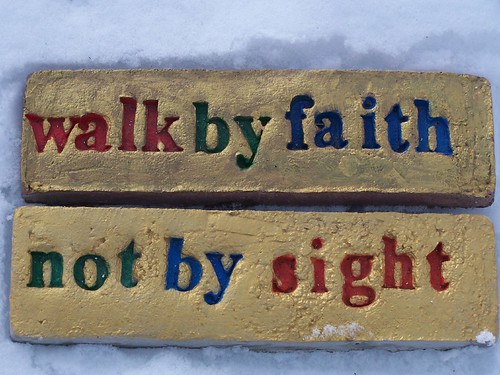
We’re steeped in a world that loves what it sees. We are in a world that lives almost exclusively by sight. My college degree was in advertising, so I was set to make my career selling things to you all by sight alone. Doctors Michael Brower and Warren Leon state that “The average American is exposed to about 3000 advertising messages a day, and globally corporations spend over $620 billion each year to make their products seem desirable and to get us to buy them.”
Living by sight means that you have to have the new product, wear the deodorant that gets you the girls, but make sure that you’re wearing the right clothes, driving the
 right car, and completely defining yourself by appearance. If the world was like advertising would have you believe, then one paper towel can hold a bowling ball. The Eiffel Tower can be seen from any window in Paris. Household cleaning products hold the key to personal fulfillment. Medieval peasants would have perfectly straight teeth. And if you buy this SUV, you can take it off-road, it will never get dirty, and you’ll never drive in traffic, ever.
Living by sight is SO limited because we so often get it wrong. We misunderstand or misinterpret things which are right in front of us and get too concerned with just staying on the surface of what we know. Here are some examples:
In the year 100, Roman engineer Julius Sextus stated “Inventions have long since reached their limit and I see no hope for future developments.”
In 1893 a journalist wrote “Law will be simplified over the next century. Lawyers will have diminished and their fees will have vastly been curtailed.
In 1895, a teacher wrote to a father of one of his students that this student… this Albert Einstein “will never amount to anything.”
In 1949, a computer scientist stated that “It appears we have reached the limits of what is possible to achieve with computer technology.
The head of the patent office in the 1960s wanted to close up shop because everything had already been invented.
I could go on and on. The world is chock full of examples of living by sight.
So how does this concern you? When you pick up your paper or watch the news, it’s easy to fall into despair. Shootings at the holocaust museum, global warming, war, famine, bail outs, company layoffs, the list goes on and on. Paul is seeking to remind us of where we get our purpose and direction from. Sight, Paul argues, is the surface layer; faith is the insight that gets below the surface to goodness, truth, and love.
However, living by faith and sight can be done at the same time. Sight and insight operate together as they do in looking at a painting, where we see not only the forms and colors of the scene but also its beauty. To see beauty, it takes insight. It’s easy to see the beauty in the Hollywood actor or actress, much harder to see it in Susan Boyle or our neighbors. That takes insight. Beauty is something which cannot be measured or completely understood, but we know it when we see it through our insight, through our 6th sense which is our faith.
Walking by faith does not mean that we walk entirely in the dark by a kind of blind trust. It doesn’t mean taking what the bible says, what authorities say, what institutions say literally and unchallenged. A struggle takes place. An interested investigation launched. Remember Doubting Thomas?
There will be times when we have to walk by the light of our faith with only the memory of the insights that were once clear to us.
 Walking by faith doesn’t mean that once you have an insight, that’s the final and absolute truth… no. We as Christians believe in the Holy Spirit and the Spirit moves and guides and changes and challenges us and provides us with new insights… some of which contradict the old.
Walking by faith is asking questions and questioning the answers. This form of inquiry in many ways resembles the scientific method. But science fails to address such important human concerns as sorrow and joy, suffering and love.
Walking by faith doesn’t mean you’re standing still. Resting on old answers. When we walk by faith we follow the Spirit and Christ. Jesus walked the walk.
He was born out of wedlock. He hung out with the wrong crowd. He was from some backwoods town and couldn’t possibly amount to anything. He was put to death in his culture’s most shameful way and yet here we are 2,000 years later still talking about him, calling him the Son of God.
Walking by faith takes a lot of courage and effort and many just don’t want to do it. But there is power in it. It is a power that the world doesn’t really understand, not really, because there’s no guarantee. In fact, it actually looks like losing. The power of walking by faith is a paradox; it’s power that looks like weakness. More than that, it is not guaranteed to stop all evildoers. It might, of course, touch and soften their hearts. It enables you to recognize God’s power positively at work in the world.
This way of living comes at a price. It can leave us with the sense that we don’t know the answers after all, that we are much further from knowing than we’d ever realized before. This humble way of living shows us that there are many more angles by which to examine life than we ever imagined. As the ancient rabbis said, “Those who say they know are much further away from the answer than those who say that they don’t know.”
Take care to distinguish between externals and internals. Question your snap judgments and check to see if they hold water. If it looks like a duck, quacks like a duck, and swims like a duck externally, internally that duck may think it’s a flying tiger or a Tyrannosaurus Rex. That frog maybe a prince in disguise. Just like Susan Boyle who looks as plain as the day is long, but inside has the voice of an angel. Jesus, who looked like a backwoods carpenter well he’s divine. He’s the way, the truth, and the light. AMEN.
Thursday, June 11, 2009
What governs my theological thinking?
“You want to know who I really am, yeah so do I.” –“See You” by Saves the Day
I had to write a "prolegomena" for my paper for doctrine. This gives the reader some background for what is to come next. I did my paper on the doctrine of the church, which i'll post parts of here in the near future. Before that, i thought i'd share this little diddy about how and why i think:
Personal experience is the start which is tempered by logic, reason, and testing these private moments against other people’s experience. For me, that is largely what religion does for me most naturally. Scripture is a tried and true measuring stick as well as a challenger to any notions I think I’ve landed on. The irrational fullness of life taught me never to discard anything. Even when it goes against all our theories, odds are, we need to reconsider these theories anyway. I try not to hold on too tightly to any notion.
This is, of course, disquieting and I’m never certain whether the compass is pointing true or not, but security and certitude does not lead to discoveries. My life has been one of constant change and challenge and my theology and thinking reflect this. I come out of a Jesuit, natural theology with a healthy amount of Roman Catholic doctrine and dogma. This is what I’m always measuring against and reacting too. I still feel like I’m learning to be a Protestant and that I’m young enough that I still can’t say what exact ideas govern my thinking.
What it consistently boils down to is context, mystery, revelation, and praxis. Context is everything. I must be humble enough to say “I don’t know” in any given context, yet strive to find the extreme points and find the middle path (predestined or free will? Yes! Horrible sinners or rational, transcendent beings? Yes!). I must rely on God for revelation, which means I must be out experiencing the world as revelation only comes through experience. And I must put all things into practice because theory without practice is pointless and practice without theory is thoughtless. All of these are intermingled, like concentric circles or better yet, four in one. I don’t know how they’re all in there, but they are!
I had to write a "prolegomena" for my paper for doctrine. This gives the reader some background for what is to come next. I did my paper on the doctrine of the church, which i'll post parts of here in the near future. Before that, i thought i'd share this little diddy about how and why i think:
Personal experience is the start which is tempered by logic, reason, and testing these private moments against other people’s experience. For me, that is largely what religion does for me most naturally. Scripture is a tried and true measuring stick as well as a challenger to any notions I think I’ve landed on. The irrational fullness of life taught me never to discard anything. Even when it goes against all our theories, odds are, we need to reconsider these theories anyway. I try not to hold on too tightly to any notion.
This is, of course, disquieting and I’m never certain whether the compass is pointing true or not, but security and certitude does not lead to discoveries. My life has been one of constant change and challenge and my theology and thinking reflect this. I come out of a Jesuit, natural theology with a healthy amount of Roman Catholic doctrine and dogma. This is what I’m always measuring against and reacting too. I still feel like I’m learning to be a Protestant and that I’m young enough that I still can’t say what exact ideas govern my thinking.
What it consistently boils down to is context, mystery, revelation, and praxis. Context is everything. I must be humble enough to say “I don’t know” in any given context, yet strive to find the extreme points and find the middle path (predestined or free will? Yes! Horrible sinners or rational, transcendent beings? Yes!). I must rely on God for revelation, which means I must be out experiencing the world as revelation only comes through experience. And I must put all things into practice because theory without practice is pointless and practice without theory is thoughtless. All of these are intermingled, like concentric circles or better yet, four in one. I don’t know how they’re all in there, but they are!
Tuesday, June 09, 2009
Trip to Ohio
this past weekend, Kate and I took Eve for her first trip to the land of our birth. the land of the bobcats, O-H-I-O! It was both great and bizarre to be in the place where i grew up with my kid.
Kate's sisters threw a "welcome Eve" shower/party/shin-dig and a ton of our friends and family showed up, including our DC friends who moved to Cincy, our C-bus crew, and Kate's aunt from San Fran! it was such a great time! the food was great (Sweet Baby Ray's Pulled Pork, YUM!), the weather perfect, and the conversations were great. i can't think of a better way to spend a saturday.
I was asked "So what was the greatest revelation/change since becoming a parent?" this comment really struck me and i had the following things to say:
1. I have a stake in things. I need to recycle more, keep healthy, and work to preserve the world and make it a better place for my kids to grow up.
2. I am no longer just me. and i never was "just" me. we have the idea that we can be individuals without contact with others, but i can't describe myself without talking about a relationship. I am a husband, friend, brother, son, and now FATHER. i used to fear this last title because of how my own father operated. but now i love this title! my identity is no longer just about me, it's about what type of person i am to my child as well as my friends and family. my identity is corporate, it always was, but now this concept is more of a reality.
we all are in community and relation with one another. i think that a balance needs to be struck between total individual (as this can result in an inflated ego, a sense of isolation leading to depression, or a skewed view of reality) and total community (as this can result in anxiety and a general laziness that "someone will take care of it, "I" don't have to do anything cause there is no "I").
3. Different Priorities. I love my single and no-offspring friends, but our concerns aren't the same anymore. that's okay, that diversity is what makes life interesting! but many ideas, concerns, or stances on issues, i just don't have or hold any more.
that's about it. the trip home also caused me to look through some ol' high school poetry and writings. man, what a collection of self-righteous pissings! i was angry! but that's what happens when you're out of place in a community and not using what is in front of you. i was frustrated by the smallness of my hometown, but i now see the beauty and gifts that experience has given me.
it was a busy weekend. it was a reflective weekend. it was a weekend at the first of the month and that means CANTON FIRST FRIDAY!!! My sister-in-law is in charge of this event, which is part block party part gallery hop. it is outstanding. Lancaster has a first friday as well, but it is nothing compared to the shin-dig Canton puts on. There were the Budweiser Clydesdales, musicians left and right, wonderful art and photography, a slew of diverse peoples (GREAT people-watching!), and the Society for Creative Anachronisms beating the crap out of each other with their home-made swords. it was AWESOME! oh! not to mention that every Saturday after 1st friday there is Scared Scriptless which is a "Who's Line is it Any Way?!" style impromptu comedy show. Downtown Canton is the place to be.
so there's my plug, where's my $50 Sarah? ;-)
Kate's sisters threw a "welcome Eve" shower/party/shin-dig and a ton of our friends and family showed up, including our DC friends who moved to Cincy, our C-bus crew, and Kate's aunt from San Fran! it was such a great time! the food was great (Sweet Baby Ray's Pulled Pork, YUM!), the weather perfect, and the conversations were great. i can't think of a better way to spend a saturday.
I was asked "So what was the greatest revelation/change since becoming a parent?" this comment really struck me and i had the following things to say:
1. I have a stake in things. I need to recycle more, keep healthy, and work to preserve the world and make it a better place for my kids to grow up.
2. I am no longer just me. and i never was "just" me. we have the idea that we can be individuals without contact with others, but i can't describe myself without talking about a relationship. I am a husband, friend, brother, son, and now FATHER. i used to fear this last title because of how my own father operated. but now i love this title! my identity is no longer just about me, it's about what type of person i am to my child as well as my friends and family. my identity is corporate, it always was, but now this concept is more of a reality.
we all are in community and relation with one another. i think that a balance needs to be struck between total individual (as this can result in an inflated ego, a sense of isolation leading to depression, or a skewed view of reality) and total community (as this can result in anxiety and a general laziness that "someone will take care of it, "I" don't have to do anything cause there is no "I").
3. Different Priorities. I love my single and no-offspring friends, but our concerns aren't the same anymore. that's okay, that diversity is what makes life interesting! but many ideas, concerns, or stances on issues, i just don't have or hold any more.
that's about it. the trip home also caused me to look through some ol' high school poetry and writings. man, what a collection of self-righteous pissings! i was angry! but that's what happens when you're out of place in a community and not using what is in front of you. i was frustrated by the smallness of my hometown, but i now see the beauty and gifts that experience has given me.
it was a busy weekend. it was a reflective weekend. it was a weekend at the first of the month and that means CANTON FIRST FRIDAY!!! My sister-in-law is in charge of this event, which is part block party part gallery hop. it is outstanding. Lancaster has a first friday as well, but it is nothing compared to the shin-dig Canton puts on. There were the Budweiser Clydesdales, musicians left and right, wonderful art and photography, a slew of diverse peoples (GREAT people-watching!), and the Society for Creative Anachronisms beating the crap out of each other with their home-made swords. it was AWESOME! oh! not to mention that every Saturday after 1st friday there is Scared Scriptless which is a "Who's Line is it Any Way?!" style impromptu comedy show. Downtown Canton is the place to be.
so there's my plug, where's my $50 Sarah? ;-)
Friday, June 05, 2009
Thursday, June 04, 2009
John Calvin
John Calvin was not a man who inspired immediate confidence in those who first met him (Steinmetz 3). He was a slight man, shy and bookish, never robust and plagued by illness (Steinmetz 3). He is a man of order and peace born into a world of conflict (Parker 9). He was conservative by nature, by upbringing, by conviction, and his theology as so old-fashioned it seemed a novelty (Parker 9). He called himself a “lover of shaded paths and retired groves” as well as “merely a man among the common people” (Parker 9, 17). He also thought of himself as a “God frustrated Scholar” meaning that his plans had been set aside to do God’s will (Gerrish 152).
He had an unbelievable list of physical ailments, an inexhaustible work ethic, and he was sharp-tongued and short-tempered (Gerrish 152). He was irritable and difficult because of these circumstances yet those who were his friends testified to the deep affection and unfailing concern he showed them and to any who turned for him for help (Gerrish 153). Calvin has been chiefly defined as a rigid and systematic bureaucrat and theologian. However, Calvin’s concerns are not motivated by systematic but through pastoral concern (Barrett). He is a practical theologian who juxtaposes themes and leaves them be; he is able to hold together dialectical tensions as theology only makes sense in living and NOT on paper (Barrett).
Calvin will be a shy, thinker, usually at the back of the group, listening. He’s not loud nor have the ego like Luther or Zwingli, not super charming or witty like Erasmus. He will speak in imagistic and metaphoric language and comment on the other reformers actions under his breath. He is best described as the character “Crab Man” from My Name Is Earl. Incredibly profound and insightful, but largely misinterpreted by those around him. He is frustrated by this but keeps trusting that things will work out.
He had an unbelievable list of physical ailments, an inexhaustible work ethic, and he was sharp-tongued and short-tempered (Gerrish 152). He was irritable and difficult because of these circumstances yet those who were his friends testified to the deep affection and unfailing concern he showed them and to any who turned for him for help (Gerrish 153). Calvin has been chiefly defined as a rigid and systematic bureaucrat and theologian. However, Calvin’s concerns are not motivated by systematic but through pastoral concern (Barrett). He is a practical theologian who juxtaposes themes and leaves them be; he is able to hold together dialectical tensions as theology only makes sense in living and NOT on paper (Barrett).
Calvin will be a shy, thinker, usually at the back of the group, listening. He’s not loud nor have the ego like Luther or Zwingli, not super charming or witty like Erasmus. He will speak in imagistic and metaphoric language and comment on the other reformers actions under his breath. He is best described as the character “Crab Man” from My Name Is Earl. Incredibly profound and insightful, but largely misinterpreted by those around him. He is frustrated by this but keeps trusting that things will work out.
Wednesday, June 03, 2009
Ulrich Zwingli
Zwingli’s character is the hardest to figure out. Many see Zwingli as a variant or deviant from Martin Luther; yet viewed as a student of humanism who departed from Erasmus; and further still the one who set up events for Calvin as Zurich flowed directly into Geneva (Aland 96; Stephens 1). He is best viewed as a reformer, patriot, rejecter of scholastic theology and a humanist (Stephens 12). He loved the classics and took delight in the literature and philosophy of Ancient Greece (Stephens 15). He saw both Luther and Erasmus as lifted up by God. With Erasmus he shared a Platonist view of body and soul, a Biblical and Christ-centered faith, valued inward piety, yet disagreed on issues of the sovereignty of God and the freedom of the will (Stephens 17). Luther he saw as articulating beliefs that he already had and noted that both Luther and Erasmus played their part in learning what true religion was (Stephens 21).
He was a scholar, musician, orator, loving father and husband, he had no personal ambition, he lacks Calvin’s mind and vanity, and is more conscious of social obligation than Luther (Potter 418). He was a man of action, what he learned from his studies he used. He was always approachable, ready to help, and constantly encouraging. He is best defined as fearless, self-confident, and self-reliant (Potter 417). His reputation as a stern, stolid reformer is counterbalanced by the fact that he had an excellent sense of humor and used satiric fables, spoofing, and puns in his writings. (Schmidt-Clausing ix) He was more conscious of social obligations than Luther and he genuinely believed that the masses would accept a government guided by God’s word and this belief led him to tirelessly promoted assistance to the poor.
I will portray Zwingli as a smart yet fiery blend. He has Erasmus’ wit (and sometimes charm) and Luther’s boisterousness. A running joke will be the view of Zwingli as an iconoclast as he will be constantly trying to smash windows and take down art. He will be opinionated yet flexible. The modern equivalent would be a Lewis Black or Stephen Colbert.
He was a scholar, musician, orator, loving father and husband, he had no personal ambition, he lacks Calvin’s mind and vanity, and is more conscious of social obligation than Luther (Potter 418). He was a man of action, what he learned from his studies he used. He was always approachable, ready to help, and constantly encouraging. He is best defined as fearless, self-confident, and self-reliant (Potter 417). His reputation as a stern, stolid reformer is counterbalanced by the fact that he had an excellent sense of humor and used satiric fables, spoofing, and puns in his writings. (Schmidt-Clausing ix) He was more conscious of social obligations than Luther and he genuinely believed that the masses would accept a government guided by God’s word and this belief led him to tirelessly promoted assistance to the poor.
I will portray Zwingli as a smart yet fiery blend. He has Erasmus’ wit (and sometimes charm) and Luther’s boisterousness. A running joke will be the view of Zwingli as an iconoclast as he will be constantly trying to smash windows and take down art. He will be opinionated yet flexible. The modern equivalent would be a Lewis Black or Stephen Colbert.
Tuesday, June 02, 2009
Martin Luther
Luther is complex! He’s superstitious due to his growing up a son of a miner and evidenced in his “storm-experience” where he promised St. Anne that he would become a monk (McDonough 83). He was a Catholic Friar, Early Catholic Reformer, and then a mature Protestant reformer and in these views there also lies the polemicist, the doctor and professor, poet and musician, and simple man with human failings (McDonough 63). He was always conscious of himself as a sinner, and not just a fallen one, but essentially a nihilist in his view of human ability. He seems impulsive, obstinate, rash and subjective—not because he was intentionally ego-centric, selfish, or biased, but because of his framework of Law-Gospel and God’s grace (McDonough 65).
Luther was the most reviled and hated person of his age yet at the same time, the most beloved and revered (Paulson 208). He was like a man who was reaching out in the dark and found a rope, and then was startled to hear a bell clanging (Cranz 83). Luther found out what a revolution it was to have Jesus Christ on your mind at all times and finding out that this causes all hell to break loose. Luther was not a mystic, he thought that the news came not from within but from outside, that this news was an announcement not a riddle about what God has done namely that Christ promise of forgiveness was the only way sinners were made right with God (Paulson 207).
Luther will be portrayed as a loud, yet humorous man; the first to speak yet surprised at others interpretations of his words. He will be larger-than-life yet be a sensitive soul. He will react first and reflect later. His modern equivalent would be Archie Bunker, gruff yet loveable.
Luther was the most reviled and hated person of his age yet at the same time, the most beloved and revered (Paulson 208). He was like a man who was reaching out in the dark and found a rope, and then was startled to hear a bell clanging (Cranz 83). Luther found out what a revolution it was to have Jesus Christ on your mind at all times and finding out that this causes all hell to break loose. Luther was not a mystic, he thought that the news came not from within but from outside, that this news was an announcement not a riddle about what God has done namely that Christ promise of forgiveness was the only way sinners were made right with God (Paulson 207).
Luther will be portrayed as a loud, yet humorous man; the first to speak yet surprised at others interpretations of his words. He will be larger-than-life yet be a sensitive soul. He will react first and reflect later. His modern equivalent would be Archie Bunker, gruff yet loveable.
Monday, June 01, 2009
Erasmus of Rotterdam
Erasmus was a classical scholar who wrote in a "pure" Latin style and enjoyed the sobriquet "Prince of the Humanists." He has been called "the crowning glory of the Christian humanists." Erasmus lived through the Reformation period and he consistently criticized some contemporary popular Christian beliefs. In relation to clerical abuses in the Church, Erasmus remained committed to reforming the Church from within. He also held to Catholic doctrines such as that of free will, which some Protestant Reformers rejected in favor of the doctrine of predestination. His middle road disappointed and even angered many Protestants, such as Martin Luther, as well as conservative Catholics. He died in Basel in 1536 and was buried in the formerly Catholic cathedral there, recently converted to a Reformed church.
Described as having quizzical blue eyes and yellow hair and his manner was “polished and affable, and charming” (Spitz 65). He was a “curious little man and one never knew how one stood with him” (Spitz 65). He can fit in anywhere as he was described as no duplicitous but able to see the positive good in the views of those around him (Spitz 66). He was sensitive to his environment and open to immediate impressions, able to speak with whoever was in front of him. (Spitz 65).
However, Erasmus was a bit of a paradox as well. As charming as he could be he could also be condescending, petty, cruel and cutting in controversy (Spitz 68). He had enormous perseverance and drive and loved the ascetic and carefully regulated life but love amenities and was something of a hypochondriac (Spitz 66). He was a citizen of the world-common yet stranger to all and a self described “heretic to both sides” (Spitz 68).
He was moderate and didn’t like extremes, valuing simplicity, inwardness, spirituality, and was Christ centric, yet he scorned monks and had contempt for scholastic doctors (Spitz 70, 73). Good manners and civility are among his top qualities but he also harbored anti-Semitic thoughts, discriminated against women, and would not have embraced multiculturalism or sanctioned a diversity of lifestyles (Rummel 108). Luther called him an “eel no one can grasp” and Thomas Martin Lindsay stated that Erasmus had the “ability of a cuddlefish to conceal himself and his real opinions” (Rummel 107).
He will be represented as a charming yet snide observer. He will largely be making his point through sarcasm and one-liners, all the while retaining his poise. Johan Huizinga observed that Erasmus was “at his most brilliant and profound when he was being humorous in an ironic way” and that is what I intend to focus on (Rummel 106). His modern equivalent would be a Jerry Seinfeld or Jon Stewart.
Described as having quizzical blue eyes and yellow hair and his manner was “polished and affable, and charming” (Spitz 65). He was a “curious little man and one never knew how one stood with him” (Spitz 65). He can fit in anywhere as he was described as no duplicitous but able to see the positive good in the views of those around him (Spitz 66). He was sensitive to his environment and open to immediate impressions, able to speak with whoever was in front of him. (Spitz 65).
However, Erasmus was a bit of a paradox as well. As charming as he could be he could also be condescending, petty, cruel and cutting in controversy (Spitz 68). He had enormous perseverance and drive and loved the ascetic and carefully regulated life but love amenities and was something of a hypochondriac (Spitz 66). He was a citizen of the world-common yet stranger to all and a self described “heretic to both sides” (Spitz 68).
He was moderate and didn’t like extremes, valuing simplicity, inwardness, spirituality, and was Christ centric, yet he scorned monks and had contempt for scholastic doctors (Spitz 70, 73). Good manners and civility are among his top qualities but he also harbored anti-Semitic thoughts, discriminated against women, and would not have embraced multiculturalism or sanctioned a diversity of lifestyles (Rummel 108). Luther called him an “eel no one can grasp” and Thomas Martin Lindsay stated that Erasmus had the “ability of a cuddlefish to conceal himself and his real opinions” (Rummel 107).
He will be represented as a charming yet snide observer. He will largely be making his point through sarcasm and one-liners, all the while retaining his poise. Johan Huizinga observed that Erasmus was “at his most brilliant and profound when he was being humorous in an ironic way” and that is what I intend to focus on (Rummel 106). His modern equivalent would be a Jerry Seinfeld or Jon Stewart.
Subscribe to:
Posts (Atom)